Artificial turf is designed to provide years of reliable performance, but its service life varies from one installation to another. Product quality, usage, climate, installation quality, and maintenance all influence how long synthetic grass remains functional and attractive. Understanding these factors can help you choose the right turf and know what to expect over time.
Quick Answer
Artificial turf typically lasts 10 to 20 years, although actual service life varies by product quality, usage, climate, installation quality, and maintenance. Premium turf installed correctly and used under appropriate conditions can remain functional toward the upper end of this range.
Average Lifespan of Artificial Turf by Quality Grade
How long artificial turf lasts depends heavily on the grade of material you choose. The general principle is consistent across the industry: a higher upfront investment usually yields a longer service life, and consistent care dramatically affects how close any turf gets to its potential lifespan.
Economy-Grade Turf: Typical Lifespan Range
Economy-grade turf is generally designed for lower-traffic applications where initial cost is a major consideration. Lighter-duty fibers, backing systems, or construction can result in a shorter potential service life than higher-grade products. For areas with limited use, however, economy turf can still provide practical value when matched to the expected level of traffic. The decision rule is straightforward: if your project sees minimal foot traffic and you will maintain it diligently, economy-grade can deliver reasonable value.
Mid-Grade Turf: Balancing Cost and Durability
Mid-grade turf offers a balance between cost, appearance, resilience, and expected service life. It is often suitable for residential areas with moderate foot traffic, where a higher level of durability is desired without moving to the most premium products.
Premium Turf: Maximum Longevity and Performance
Premium turf is generally engineered with more durable fibers, backing systems, and UV stabilization. It is better suited to demanding residential or commercial environments where long service life is a priority. When properly installed and maintained, premium turf can remain functional toward the upper end of the typical lifespan range.
To understand the material differences between polyethylene, nylon, and polypropylene fibers that determine turf quality, see our guide on types of artificial turf.
Does the Artificial Turf Warranty Match Its Lifespan?
Manufacturer warranties and actual lifespan are not the same thing. A warranty does not necessarily indicate when artificial turf needs to be replaced. Warranty terms vary by manufacturer and product, while actual service life depends on usage, climate, installation, and maintenance. Treat the warranty as a baseline assurance against manufacturing defects rather than a prediction of when the turf will fail. Real-world longevity is driven far more by usage, climate, and care than by the warranty number on paper.
What Factors Affect Artificial Turf Lifespan?
High Foot Traffic and Pet Use
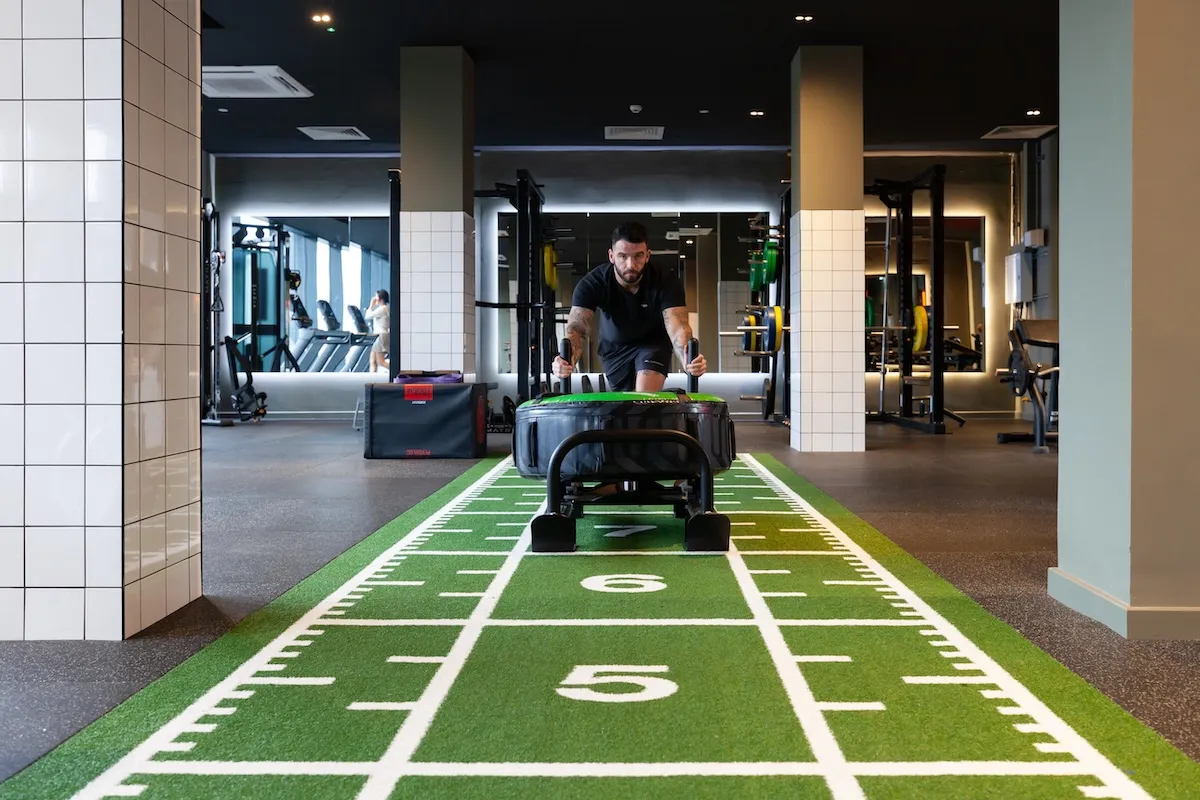
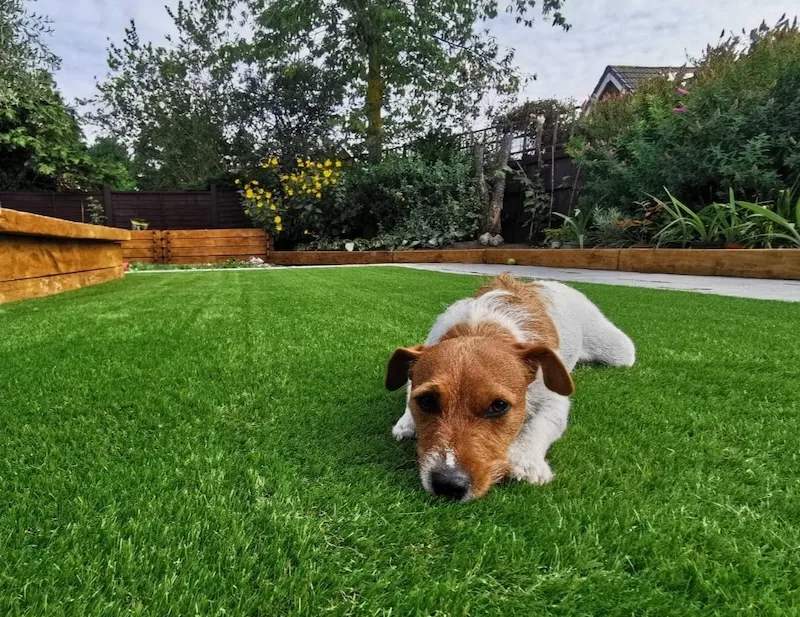
Heavy foot traffic gradually compresses turf fibers and infill, particularly in frequently used areas. Pets can add another source of wear through repeated traffic, digging, scratching, and exposure to urine. Turf designed for the actual level of use generally lasts longer than a product selected primarily for appearance or price.
Poor Drainage and Inadequate Base Preparation
Drainage and base stability have a direct effect on turf longevity. Poorly prepared or uneven bases can lead to standing water, movement, wrinkles, and premature wear. Persistent moisture can also affect backing materials and create conditions that contribute to mold or other problems. For detailed base preparation and installation steps, see our guide on how to install artificial grass on dirt.
Exposure to Harsh Weather and UV Radiation
Prolonged UV exposure can gradually affect fiber color and strength, while extreme heat or repeated freeze-thaw cycles can place additional stress on the turf system. UV-stabilized materials and products designed for the local climate generally offer better long-term performance.
Poor Infill Management
Uneven or insufficient infill can reduce fiber support and increase flattening in high-traffic areas, which may accelerate visible wear over time. For detailed application techniques, see our guide on how to spread infill on artificial turf.
Poor Installation and Seaming
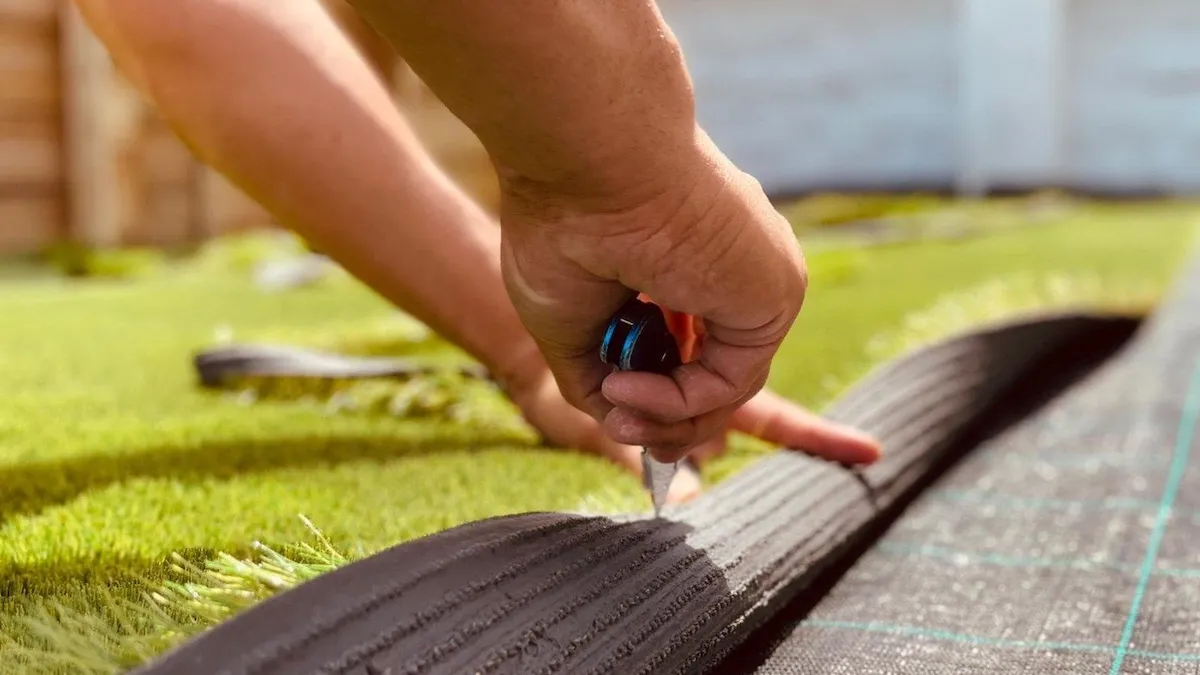
Poor installation can shorten turf life even when the turf itself is high quality. Poor seams, unstable edges, inadequate drainage, and movement beneath the turf can create premature wear and structural problems. Installation quality is therefore just as important as turf construction when evaluating expected service life. For more on how seams, drainage, base preparation, and weed barriers affect long-term turf performance, see our guide on how to prevent and stop weeds in artificial turf.
How Turf Construction Affects Artificial Turf Lifespan?
Raw Material Quality and Polymer Formulation
The quality of the polymers used to produce artificial turf has a direct effect on fiber strength, flexibility, and aging resistance. Premium turf is typically made with carefully formulated virgin polymers or other high-quality polymer blends to provide more consistent long-term performance.
Lower-cost products may use different polymer formulations or recycled content to reduce material costs, but recycled content alone does not determine quality. The actual performance depends on the polymer quality, formulation, processing, and overall turf construction.
High-quality raw materials help turf fibers retain their structure, flexibility, and appearance after years of outdoor exposure.
UV Stabilization: The Invisible Protection Behind Color Retention
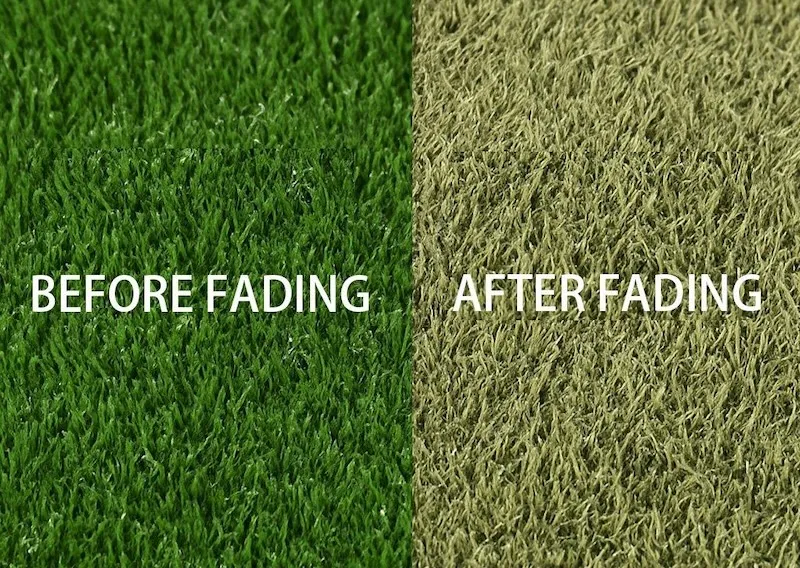
Artificial turf is exposed to sunlight for years, making UV resistance an important part of long-term durability. UV stabilizers and anti-aging additives are incorporated into the polymer formulation to help protect fibers from prolonged UV exposure.
The quality and level of UV stabilization can vary between products. Turf with inadequate UV protection may be more susceptible to fading, brittleness, and surface degradation over time, particularly in regions with intense sunlight.
Backing System Quality
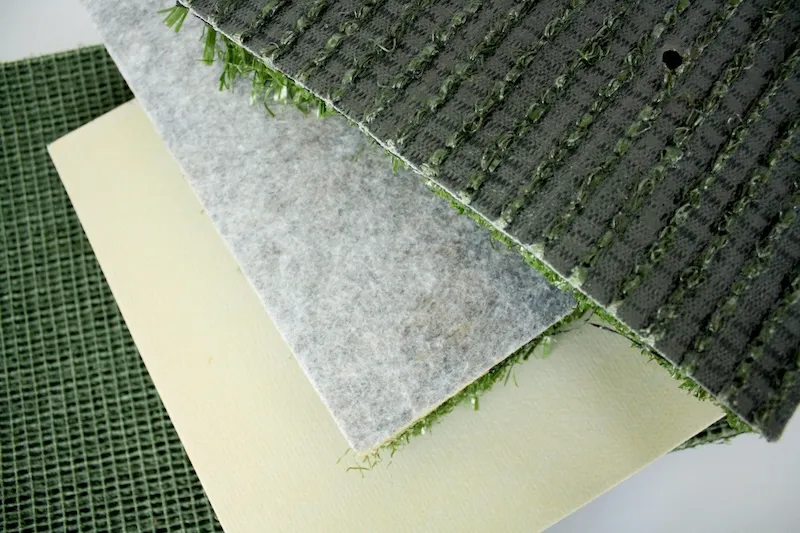
The backing system plays an important role in fiber retention, dimensional stability, and overall turf durability. Depending on the application and product design, manufacturers may use PU or SBR latex backing systems.
The backing material itself is only part of the equation. Coating formulation, adhesive coverage, curing conditions, and fiber-locking performance also affect how well the backing performs over time.
This is one reason two turf products with similar appearance and specifications can show very different levels of fiber shedding and backing stability after several years of use.
Manufacturing Process Control
Even with good materials, production control is essential. Fiber extrusion, tufting, coating, and curing all influence fiber consistency, fiber retention, backing stability, and overall product performance. This is why two turf products with similar specifications can perform very differently after years of sunlight, weather, and daily use.
How to Extend the Life of Artificial Turf
Regular Brushing and Rinsing to Remove Debris
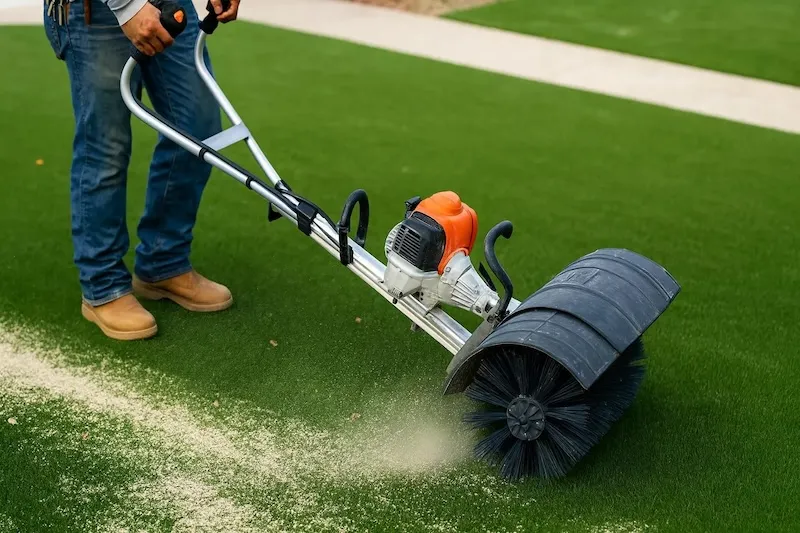
Regular brushing and rinsing help remove debris and keep turf fibers upright. The exact cleaning frequency depends on traffic, pets, weather, and the surrounding environment.
For detailed cleaning routines, schedules, and solutions to common problems, see our artificial turf care and cleaning guide.
Proper Infill Management and Top-Up Schedules
Infill supports the blades and aids drainage, but it compacts or migrates over time, especially in high-traffic areas. Check infill depth seasonally and add fresh material to maintain consistent support. Top-ups restore resilience and help the turf spring back after use. Use the same type of infill originally installed to prevent compatibility issues and preserve performance.
Match Maintenance to the Turf's Use
There is no single maintenance schedule that fits every artificial lawn. Residential turf with light foot traffic may require less frequent care than a pet area, commercial landscape, or high-use surface. Matching brushing, cleaning, and infill maintenance to actual usage helps reduce premature wear without duplicating a full maintenance routine.
How Do You Know When Artificial Turf Needs Replacing?
Artificial turf does not need to be replaced simply because it reaches a certain age. The better indicator is its physical condition and performance. If routine maintenance and minor repairs can no longer restore the turf's appearance, stability, or drainage, replacement may be more practical.
Permanently Flattened Fibers
Turf fibers naturally flatten in high-traffic areas over time, but regular brushing and proper infill can usually restore some of their upright appearance. When fibers remain permanently flattened despite routine maintenance, the turf may have reached the end of its useful service life. Widespread matting across heavily used areas is a stronger indication of replacement than isolated flattened spots.
Severe Fading or Fiber Damage
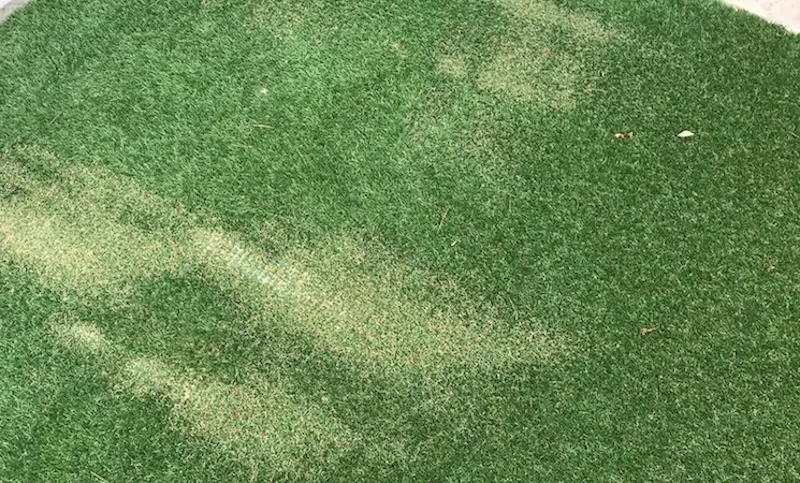
Some color change is expected after years of UV exposure, but severe fading, brittle fibers, cracking, or visible surface deterioration can indicate significant material degradation. If the fibers have lost their resilience and continue to break or deteriorate, replacing the affected turf may be more effective than attempting to restore its appearance.
Backing or Seam Deterioration
The backing is an essential part of the turf system, and deterioration can affect stability and long-term performance. Repeated seam separation, cracking or deterioration of the backing, and widespread edge damage may indicate that the turf system is no longer structurally reliable. While isolated damage can sometimes be repaired, extensive or recurring problems may justify full replacement.
Persistent Drainage Problems
Artificial turf should allow water to drain through the surface and underlying system efficiently. Persistent pooling, slow drainage, or water-related deterioration can signal problems within the turf or its supporting base. If drainage problems continue after appropriate maintenance or repair, replacing the turf system may be necessary to restore reliable performance.
FAQs About Artificial Turf Lifespan
How long does artificial turf last on average?
Artificial turf typically lasts 10 to 20 years, depending on product quality, usage, climate, installation, and maintenance. Higher-quality turf used in suitable conditions can remain functional toward the upper end of that range.
What is the biggest factor affecting artificial turf lifespan?
There is no single factor. Product construction, usage intensity, climate, installation quality, and maintenance all interact.
What is the lifespan of artificial turf with pets and high traffic?
Pets and heavy use shorten lifespan compared with low-use settings. Frequent traffic compresses fibers and infill, and pet urine can cause odors and backing deterioration if not rinsed away. Prompt rinsing, regular brushing, and timely infill top-ups help preserve the turf's integrity and extend its service life despite the added stress.
Does artificial turf last longer with proper maintenance?
Yes. Regular cleaning, brushing, debris removal, and proper infill management can help turf remain functional and attractive for longer.
Conclusion
Artificial turf typically lasts 10 to 20 years, but no single lifespan applies to every installation. Product quality, traffic, climate, installation quality, and maintenance all influence how long a turf system remains attractive and functional. Choosing turf for the actual conditions of the site and maintaining it properly can help you reach its expected service life and delay premature replacement.