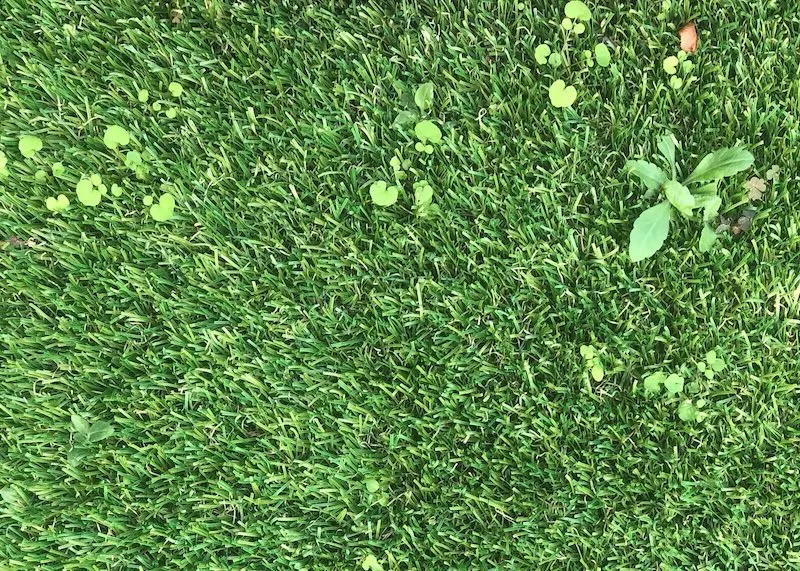
Artificial turf is designed to provide a clean, low-maintenance lawn, but many homeowners are surprised to find weeds appearing between synthetic grass blades. The good news is that weeds usually do not grow through the turf itself. They typically appear because of surface debris, exposed edges, poor seams, or installation issues underneath the turf.
Why Do Weeds Grow in Artificial Grass?
Windblown Seeds and Debris Accumulation
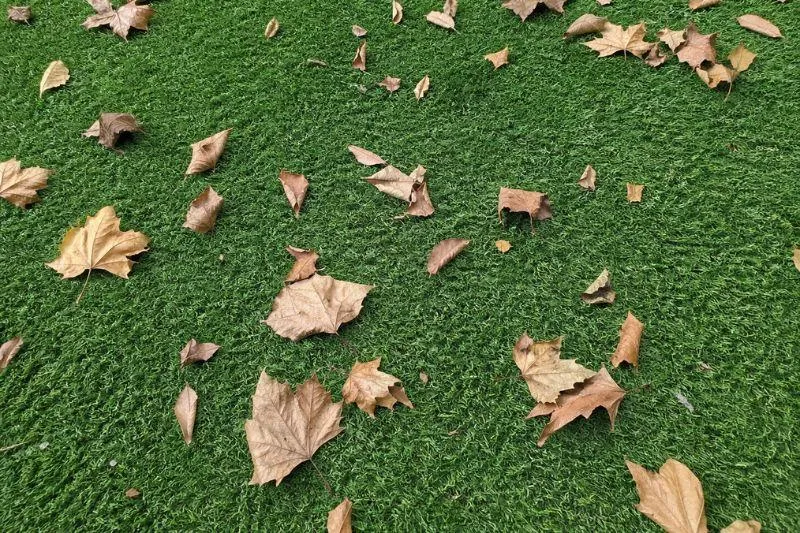
Wind carries seeds, pollen, and fine organic debris onto synthetic turf. These materials settle between the blades and along the perimeter, a surface medium where seeds can take root. This is especially common near fences, garden beds, and open areas where debris naturally collects.
Seam Gaps, Perimeter Flaws, and Sub-Base Exposure
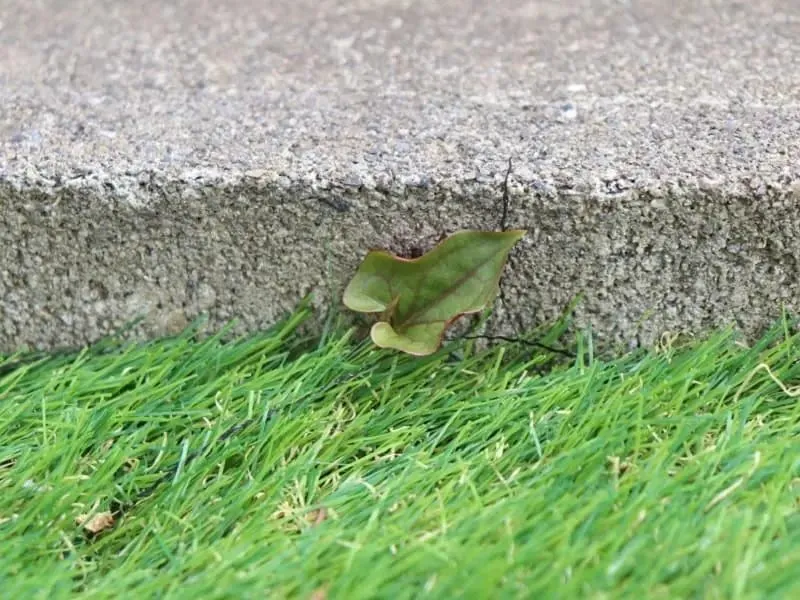
Seams between turf rolls, edges meeting hardscape, and the drainage holes in the backing are all vulnerable spots. Through these gaps, soil and organic material can migrate upward from the sub-base or settle from windblown deposits. Seeds that land directly into these cracks reach the ground below and emerge alongside the turf.
Organic Matter in Infill and Drainage Layers
Infill materials such as sand or rubber granules trap leaves, dirt, and pollen that wash down through the turf, and the drainage layer beneath collects organic debris over time. As this matter decays, it provides nutrients and a damp environment ideal for germination.
How Artificial Turf Systems Prevent Weed Growth
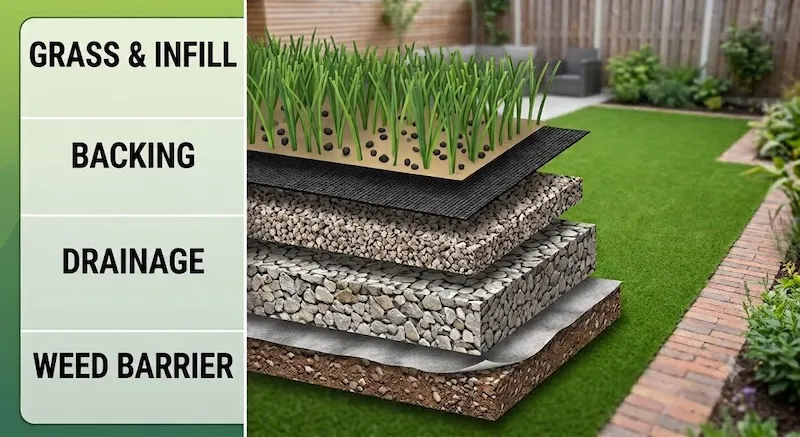
Many homeowners assume artificial turf prevents weeds simply because the grass blades are synthetic. In reality, long-term weed control depends on the entire turf system — including the backing, infill, weed barrier, and base preparation.
Key Layers of an Artificial Turf Weed Prevention System
Synthetic Grass Fibers
Synthetic fibers do not provide soil or nutrients for weeds to grow. However, they cannot prevent seeds from entering through seams, edges, or surface debris.
Turf Backing and Drainage System
The backing layer supports the fibers and allows water to drain through designed openings. Combined with proper base preparation, it helps reduce conditions that encourage weed growth.
Infill Layer
Infill supports turf performance but can trap debris over time. Regular brushing prevents organic buildup that may encourage weed growth.
Weed Barrier Membrane
A quality geotextile weed barrier creates separation between the soil and turf system. It helps reduce weed growth from below, prevents soil migration, and maintains proper drainage.
Compacted Aggregate Base
The base layer provides stability and drainage. A properly compacted base reduces gaps where soil, moisture, and organic material can accumulate.
These components work together as a complete system. A failure in any layer — especially the base, weed barrier, or seams — can create conditions where weeds appear.
5 Critical Installation Mistakes That Lead to Weed Growth
Most weed problems usually happen because installation creates weak points where seeds, soil, and moisture can accumulate.
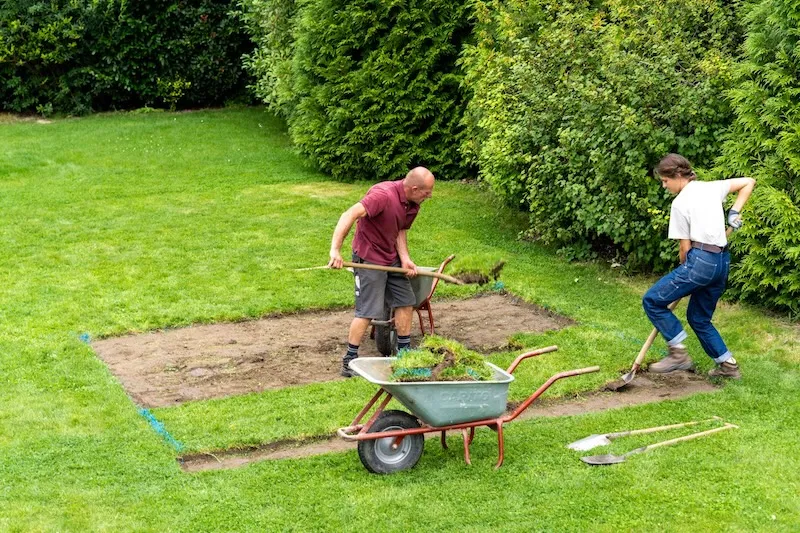
1. Installing Turf Over Existing Weeds
Leaving existing vegetation underneath the turf can cause future problems:
- Remaining roots continue growing
- Decaying plants create organic material
- The base becomes unstable
Solution:
Remove all vegetation before installation and prepare a clean, compacted foundation.
2. Inadequate Sub-Base Preparation and Compaction
The base layer is essential for both stability and drainage.
- Loose aggregate creates gaps
- Poor drainage increases moisture buildup
- Soil movement affects turf performance
Solution:
Use suitable base materials and follow proper aggregate base compaction standards before turf installation.
3. Poorly Sealed Seams and Perimeter Gaps
Seams and perimeter areas are the most common entry points for weeds. In most cases, weeds do not penetrate the turf backing; they exploit gaps caused by improper edge securing, loose seams, or unstable foundations.
Solution:
- For Concrete / Hardscape Installations: the turf perimeter should be securely bonded with professional turf adhesive to minimize gaps where windblown seeds and debris may accumulate.
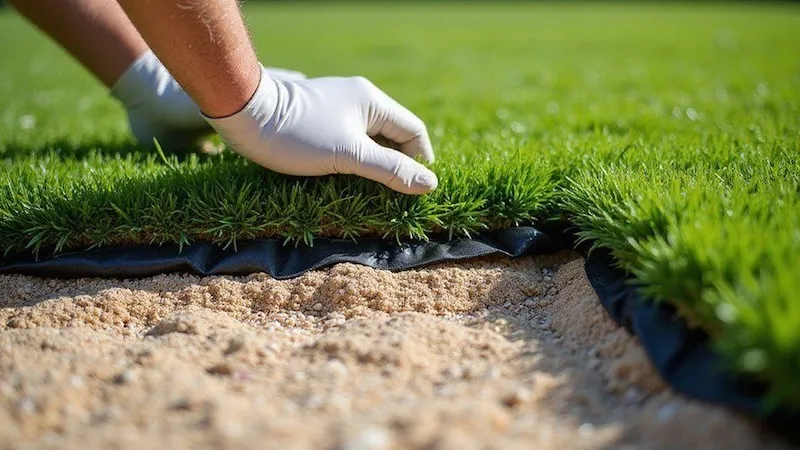
- For Natural Ground / Aggregate Installations: Compact a crushed aggregate sub-base and lay a commercial-grade weed barrier. Join seams with high-tensile waterproof tape and two-component adhesive, then anchor perimeters and seams using turf pins spaced every 6 to 12 inches.
- Backing Quality Matters: Low-quality backing systems may deteriorate over years of moisture exposure and temperature changes, weakening seam stability and creating potential gaps. High-density PU or multi-layer latex backing ensures long-term seam integrity.
4. Skipping or Misplacing the Geotextile Weed Barrier
A missing or damaged weed barrier creates a direct path for weeds and soil movement.
Solution:
Install a durable geotextile weed barrier with properly overlapped seams.
5. Inefficient Drainage Design
Excess moisture can accelerate organic buildup and create better conditions for weeds.
Solution:
Ensure the turf backing, drainage layer, and base system work together to move water away efficiently.
How to Eliminate and Prevent Weeds
Manual Removal
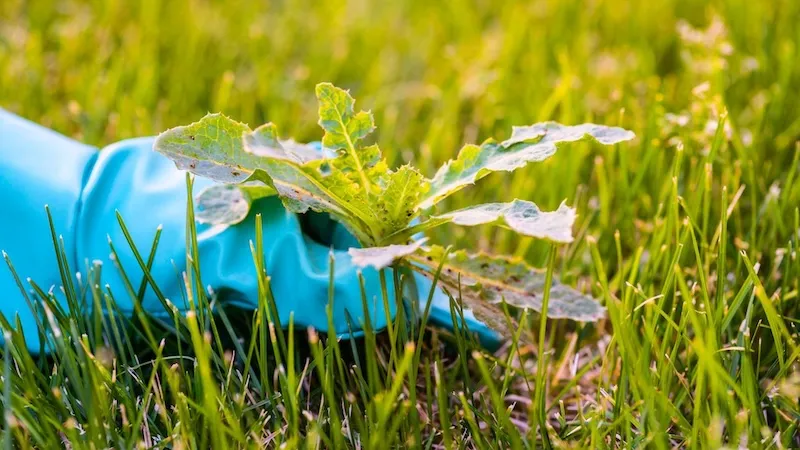
The simplest way to deal with unwanted plants is to pull them out by hand. Because artificial turf is installed over a compacted base, small weeds are usually easy to remove by hand. Left unchecked, though, those plants spread and become harder to manage. Pay particular attention to seams and edges where turf meets hard surfaces, since those are the common entry points. Pull weeds while they are still small and before they set seed. This simple habit prevents small weed problems from becoming larger maintenance issues.
Natural Weed Killers
For stubborn growth, common household items make safe and effective spot treatments. Boiling water poured directly onto a weed will scald it, while a vinegar spray disrupts the plant's cell structure. Both are well suited to weeds sprouting through seams or perimeter gaps. Use these methods only for small areas, and test a hidden section first to avoid affecting turf components or nearby plants.
Long-Term Prevention
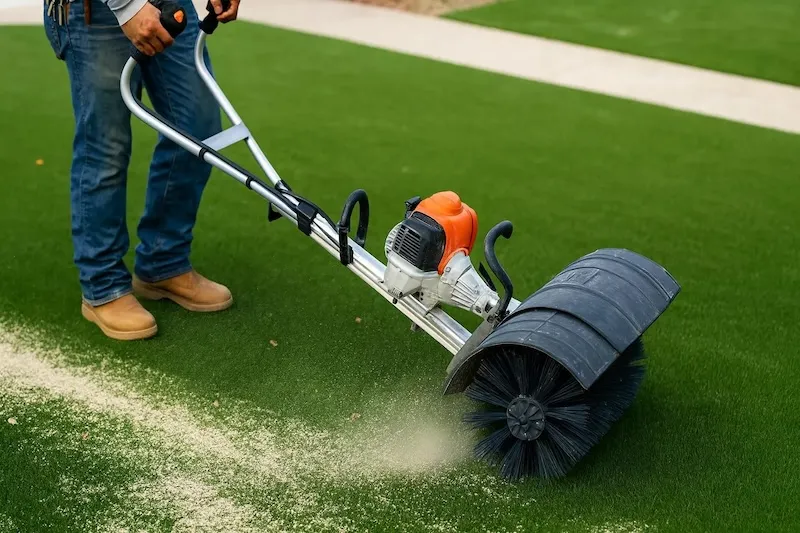
Prevention comes down to consistent maintenance. Brushing the turf regularly lifts the blades and clears organic debris like fallen leaves and pollen before it can decompose into a thin soil layer, depriving seeds of the medium they need. Maintaining proper infill levels keeps fibers upright and reduces the gaps where debris lodges. To prevent weeds in artificial grass, brush at least once a month and inspect infill depth seasonally. For larger or heavily used surfaces, professional turf cleaning offers a deeper reset when seams and drainage holes start to collect debris.
Choosing the Best Weed Barrier for Artificial Grass
A quality weed barrier for artificial turf installation is not optional — it is essential for long-term control. The barrier blocks seeds and roots from reaching the soil below while still letting water drain through. Skip it, and weeds will exploit every seam, drainage hole, and edge.
Types of Weed Barriers
The two most common options are geotextile fabric and solid membrane barriers.
Non-Woven Geotextile Fabric: Engineered from needle-punched synthetic fibers, offering exceptional water permeability and soil separation.
Woven Polypropylene Fabric: Made from interwoven plastic strands, providing higher tensile strength and structural stability.
Key Installation Steps: Overlap, Secure, and Trim
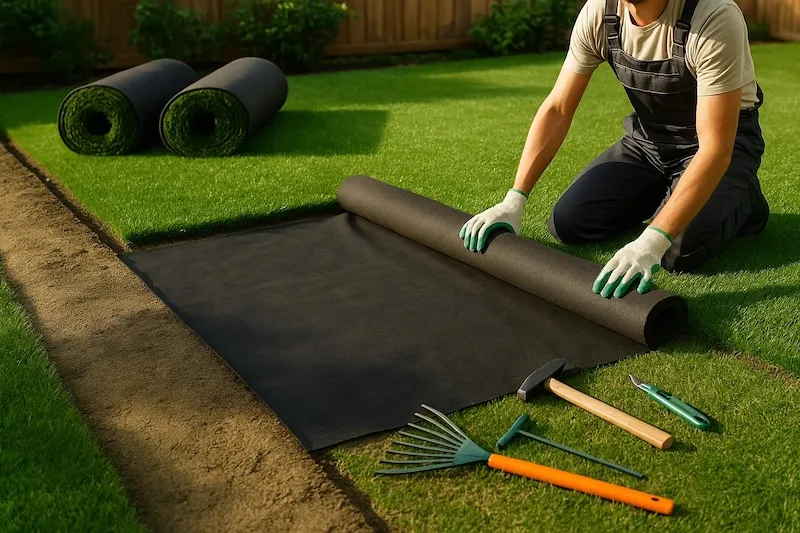
Sound artificial grass weed barrier installation starts with a clean, compacted base. Work through these steps:
- Clear the site. Remove all existing weeds first — never lay a barrier over a weed-infested base.
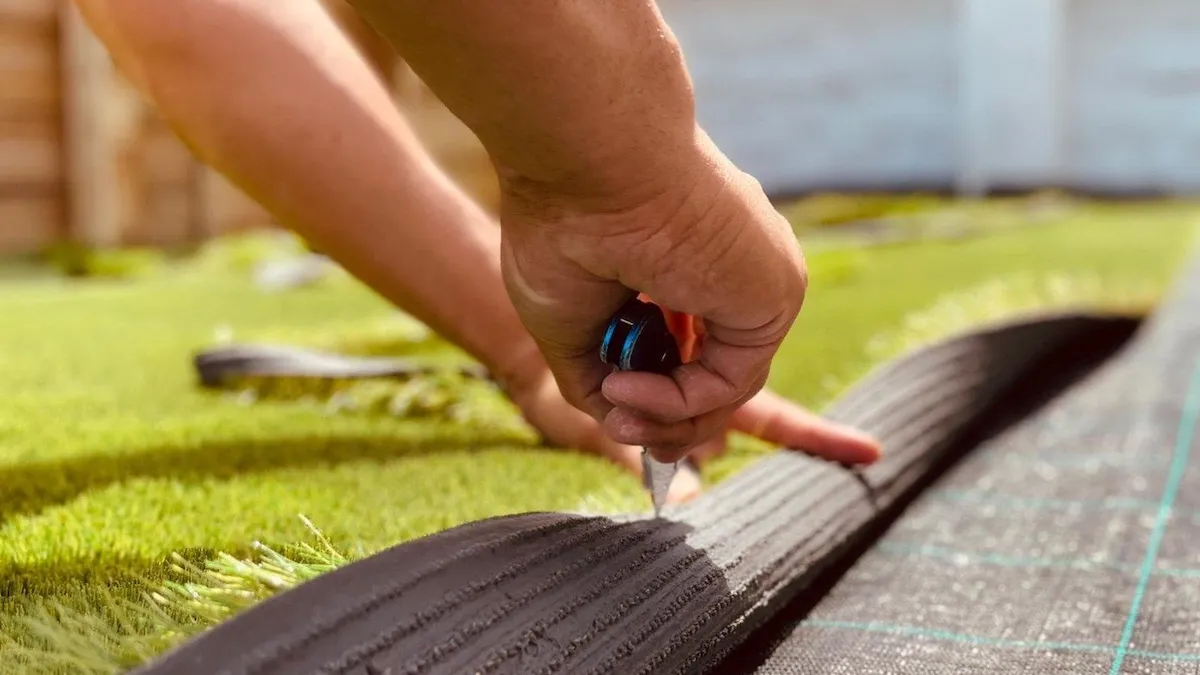
- Lay the barrier. Roll it across the entire area, overlapping each roll by at least 6 inches. Gaps are where weeds get in.
- Secure it. Anchor edges and overlaps with landscape staples every 12 to 18 inches.
- Trim. Cut excess along the perimeter, leaving a few inches to tuck against the turf edging.
Matching Barrier Specifications to Climate
Many international buyers try to cut costs by sourcing generic, lightweight landscape fabric locally. While it saves money upfront, inferior barriers lose structural integrity within 2 to 3 years, allowing aggressive weeds to push up and deform the entire turf surface.
However, selecting a barrier isn't as simple as buying the heaviest material available. Professional specifiers match the barrier to the local environment:
• For Rainy / High-Humidity Regions: Prioritize higher water permeability. Select a needle-punched non-woven geotextile fabric. Excellent drainage prevents water from pooling beneath the backing, preserving base stability and suppressing damp-loving weed spores.
• For Arid / High-UV Regions: Prioritize sunlight blockage and UV resistance. Choose a higher-density woven or composite fabric. The heavy density reduces sunlight penetration and improves long-term weed suppression.
• Virgin Polymer vs. Recycled Material: Ensure the fabric is manufactured from 100% virgin Polyethylene (PE) or Polypropylene (PP) enriched with UV stabilizers. Recycled polymer fabrics break down rapidly under underground soil acidity and moisture fluctuation.
Common Mistakes and How to Fix Them
Even a well-chosen barrier can fail if it's installed carelessly. These errors are the most common reasons weeds find their way through synthetic turf.
| Mistake | Why It Causes Weeds | How to Fix It |
|---|---|---|
| Seams not overlapped | Barrier sections butted together leave a gap seeds and roots slip through | Lift the turf, overlap the barrier by at least 4 inches, and staple the joint |
| Low-quality or thin fabric | Flimsy material tears under traffic and UV, leaving unprotected patches | Replace with a high-density, geotextile-grade membrane rated for turf |
Correcting these mistakes during installation ensures long-term weed control and prevents premature system degradation.
FAQs About Weeds in Artificial Turf
1. How often should artificial turf be cleaned to prevent weeds?
Typically, a basic monthly brushing removes leaves and organic debris for standard lawns. If your lawn is shaded, under mature trees, or exposed to heavy pet traffic, we recommend bi-weekly clearing of organic matter and seasonal deep-rinsing of the infill layer to clear trapped pollen before seeds can germinate.
2. Can vinegar damage artificial grass?
Vinegar works well as a spot treatment for small weeds in artificial grass, but apply it carefully. While safer than chemical herbicides, highly concentrated or repeated vinegar use can degrade turf components over time. Avoid soaking large areas, spraying nearby plants, or letting acidic runoff pool in the infill. For occasional weeds, hand pulling remains the safest option.
3. Does installing a weed barrier slow down lawn drainage during heavy rain?
No, provided you select a commercial-grade needle-punched geotextile fabric. Quality non-woven weed barriers are engineered specifically for geotextile drainage, allowing water to pass through freely (typically rated for 30–50 GPM per square foot) while physically retaining sub-base soil and blocking root penetration. Only solid plastic sheets or low-density films cause water pooling and should never be used.
4. Can I use weed killer on artificial grass?
Most water-based weed killers are unlikely to damage quality artificial turf when used correctly. However, avoid oil-based chemicals or harsh solvents, which may affect turf backing materials.
Conclusion
Weeds in artificial turf are rarely a turf issue—they stem from installation and maintenance. Proper base compaction, a high-density weed barrier, sealed perimeters, and regular brushing will keep your lawn pristine for years.
Planning a commercial or large-scale turf project? Contact our technical team for custom specs on backing, drainage, and weed barrier solutions.