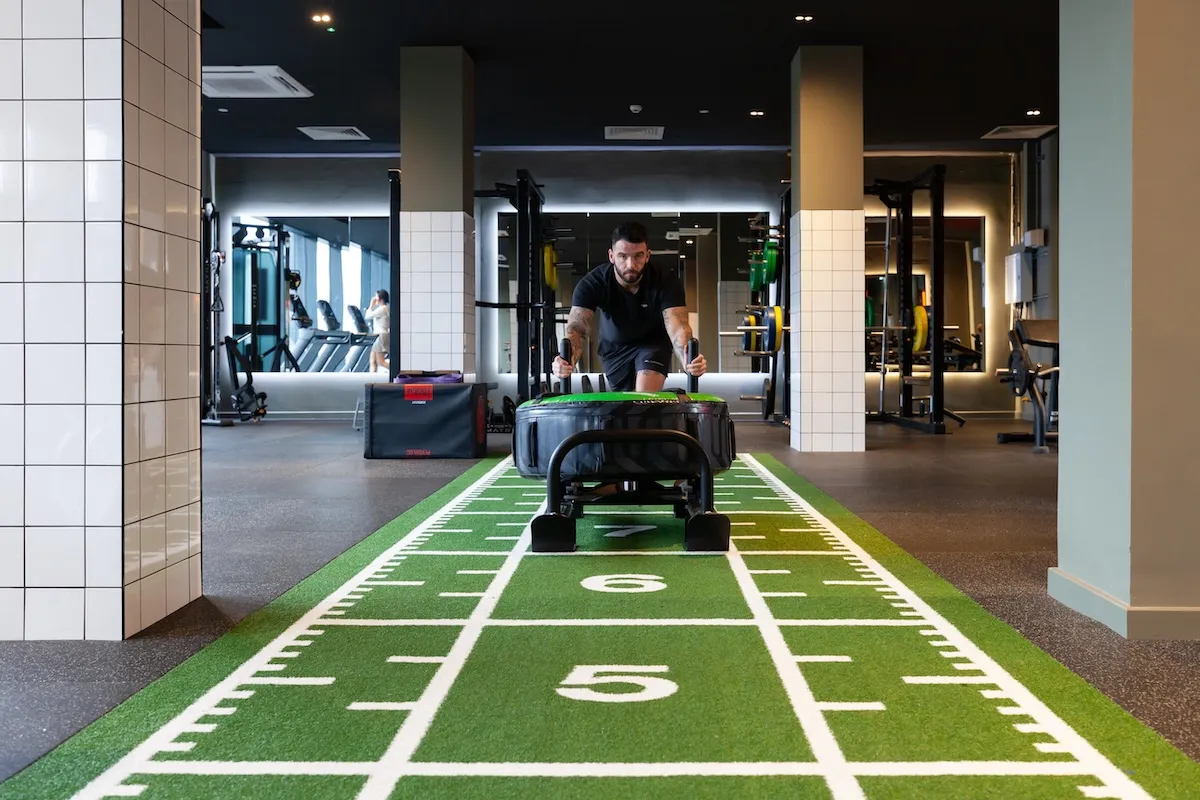
Sled pushing and pulling are essential high-intensity training exercises in CrossFit boxes, HYROX centers, functional training facilities, and commercial gyms.
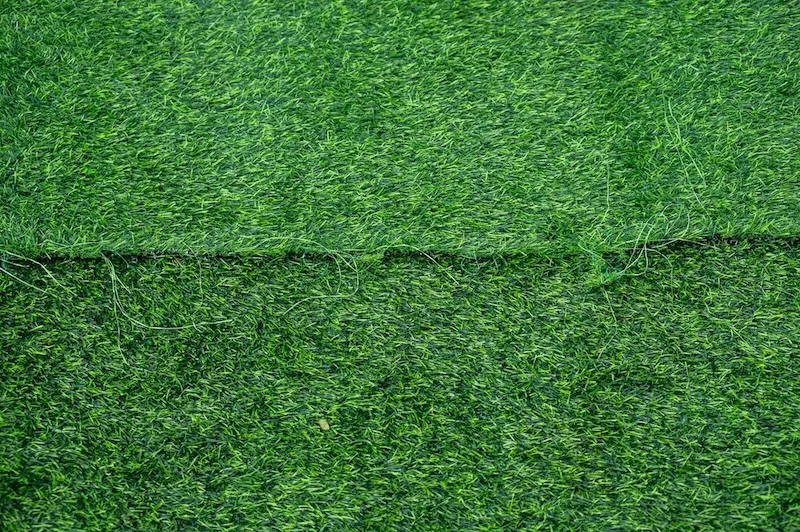
After a period of active use, however, many facility managers notice that the artificial turf in the sled lane deteriorates far faster than in other training zones. The turf fibers gradually flatten, wear down, or shed entirely, leaving visible drag tracks across the surface. Over time, the turf roll may shift, buckle, or curl along the edges, while seam joints between adjacent rolls begin to pull apart.
For commercial gyms, these are far more than cosmetic flaws. Premature turf replacement incurs additional material purchasing, installation labor, and costly business downtime. Furthermore, buckled turf and raised seam edges create dangerous tripping hazards for members and increase facility liability.
Why Does Sled Training Damage Turf More Than Walking?
Normal walking and running primarily generate repeated vertical forces, whereas sled training subjects the flooring to a completely different mechanical load.
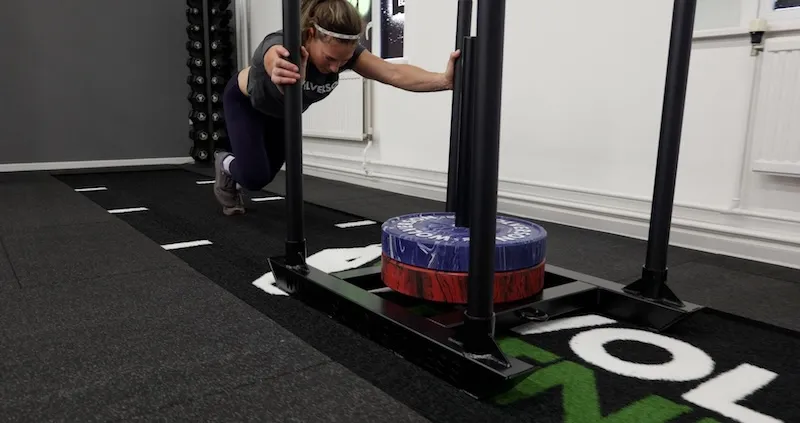
When an athlete pushes or pulls a weighted sled, they continuously apply high horizontal force to the ground to overcome the sled's dead weight, base friction, and surface resistance. Sports science research confirms that heavy sled training is by no means a low-load activity:
- A Journal of Human Kinetics study of 23 experienced young sprinters performing 30 m sled drags at 10%, 15%, and 20% of body weight found that increasing resistance significantly increased the mechanical demands of sled training.
- Another study involving 90 young athletes tested sled pushing at resistance levels that reduced maximum sprinting velocity by 25%, 50%, and 75%, demonstrating the immense breadth of resistance encountered in daily workouts.
- Research on rugby players used sled-push loads of 75% and 125% of body weight, further demonstrating the high resistance that can be used in sled training.
Unlike walking, which relies mainly on vertical impact, sled training exerts sustained, repetitive horizontal forces. As a result, dedicated sled tracks experience localized mechanical strain, causing rapid wear while neighboring functional turf zones remain intact.
3 Common Problems in Commercial Sled Lanes
1. Localized Turf Wear, Flattening, and Fiber Loss
The earliest symptom of turf damage is a change in fiber structure. Repeated sled friction forces the yarn to flatten and wear. If the turf is not built for high-intensity sled work, continued exposure leads to:
- Loss of fiber uprightness
- Reduced surface flatness
- Highly visible sled tracking paths
- Fiber fracture and localized thinning
- Severe bald spots in high-traffic zones
While initial thinning appears purely cosmetic, unaddressed wear quickly escalates into real operational costs. Maintenance staff must spend extra time cleaning loose fibers from the floor. If damage becomes localized and severe, staff must cut out and patch damaged sections. If deterioration spreads, the entire roll must be replaced—requiring new cutting, seam tape, adhesive application, and labor costs. During repairs, affected workout zones must be closed off, hurting the gym's visual appeal and member experience.
2. Turf Movement, Buckling, and Edge Lifting
Fiber wear is not the only failure mode; sled training can also cause the entire turf sheet to shift. When turf experiences repeated pulling without proper subfloor anchoring, several structural issues can occur:
- Lateral turf displacement and creeping
- Localized surface buckling and rippling
- Wrinkling and raised edges
- Misaligned seam joints and uneven flooring transitions
Commercial gyms feature diverse subfloors, including bare concrete, interlocking rubber tiles, and hardwood floors—each possessing different friction and stability characteristics.
Therefore, turf selection cannot be evaluated in isolation. Even a high-quality turf product will shift, buckle, or tear at the seams if paired with an incompatible backing or improper installation method. For instance, laying premium turf over an unanchored rubber mat allows the turf to move whenever the rubber layer flexes under horizontal load. In this scenario, simply buying a higher-grade turf will not solve the underlying issue.
The correct system integration workflow is:
Stable Subfloor → Secure Turf Anchoring → Proper Seam Treatment → Edge Transitioning
A high-frequency sled track must be engineered as a complete flooring system rather than a standalone roll of turf.
3. Seam Separation
Large functional areas require multiple turf rolls joined together, creating a critical weak point: the seams. Repeated sled drags exert continuous horizontal pull directly across these join lines. Improper seam installation eventually causes:
- Widening gaps between rolls
- Curling and raised seam edges
- Adhesive separation along the joint
- Localized backing tears and uneven ridges
When laying multiple turf rolls, seams must never be simply placed edge-to-edge without structural backing.
Our Comprehensive Gym Turf Solution
Our gym turf solution addresses the key factors that determine sled-track performance: turf architecture, anchoring, seam treatment, and floor transitions.
Choosing the Right Turf Architecture
Different facility types have vastly different performance demands. An occasional functional area requires entirely different specs than a commercial gym running heavy sled drags daily.
Key Pitfalls to Avoid:
- Installing landscape turf or ECO series directly in high-frequency sled zones. The ECO series uses a PE straight + PP curled yarn blend with lower stitch density, designed for light temporary use rather than heavy sled dragging.
- Selecting turf based solely on surface softness while ignoring yarn Dtex and stitch density metrics.
- Overlooking backing fiber retention. Even with high-quality yarn, an inferior backing coating allows fibers to be pulled out under sled forces.
Selecting the Anchoring Method Based on Subfloor
-
Long-Term, High-Frequency Commercial Sled Tracks — Prioritize Full-Surface Adhesive Bonding
For permanent commercial installations using standard SBR or SPU backed turf, full-bed adhesive bonding is the preferred standard. The entire turf roll is bonded directly to the substrate using specialized polyurethane turf adhesive, helping distribute sled-induced forces across the floor. This applies to concrete and wood subfloors. If installing over interlocking rubber flooring, secure the rubber tiles firmly to the subfloor first to prevent underlying shifting. -
Heavy-Duty Double-Sided Tape — Restricted to Low-Intensity or Temporary Setups
Even heavy-duty double-sided tape offers limited resistance against continuous horizontal sled friction and still carries long-term shifting risks. -
PU Foam-Backed Turf for Specialty Applications
Turf with an integrated 5–10 mm PU foam backing features higher self-weight and friction. It can be installed glue-free as a floating floor in garage gyms, temporary events, or spaces requiring mobility. However, for heavy sleds and high-frequency commercial applications, full-bed adhesive installation remains strongly recommended to eliminate movement.
Critical Seam and Edge Transition Rules
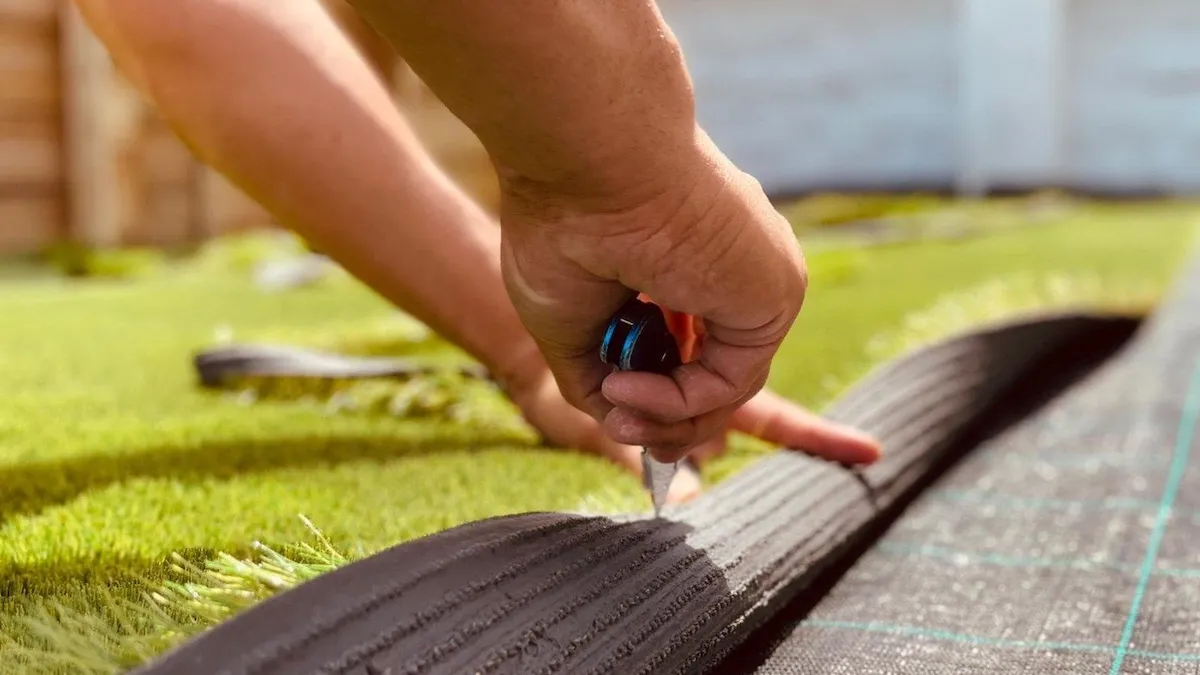
Turf roll edges should be precisely trimmed and tightly aligned to minimize gaps at the seam. Install heavy-duty seaming tape underneath the joint and bond it securely with turf adhesive to prevent seam splitting.
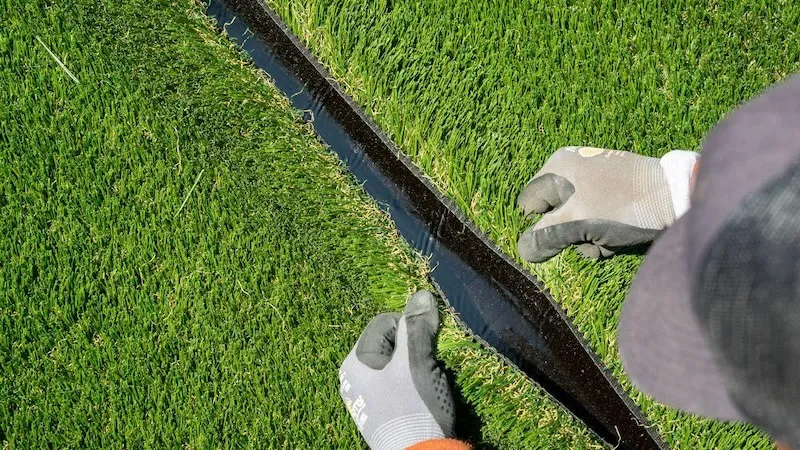
Key Seam Installation Steps:
- Execute precision trimming along roll edges
- Align roll edges seamlessly
- Provide structural seam tape support underneath
- Apply specialized adhesive to the seaming tape
- Select an appropriate bonding method for the subfloor
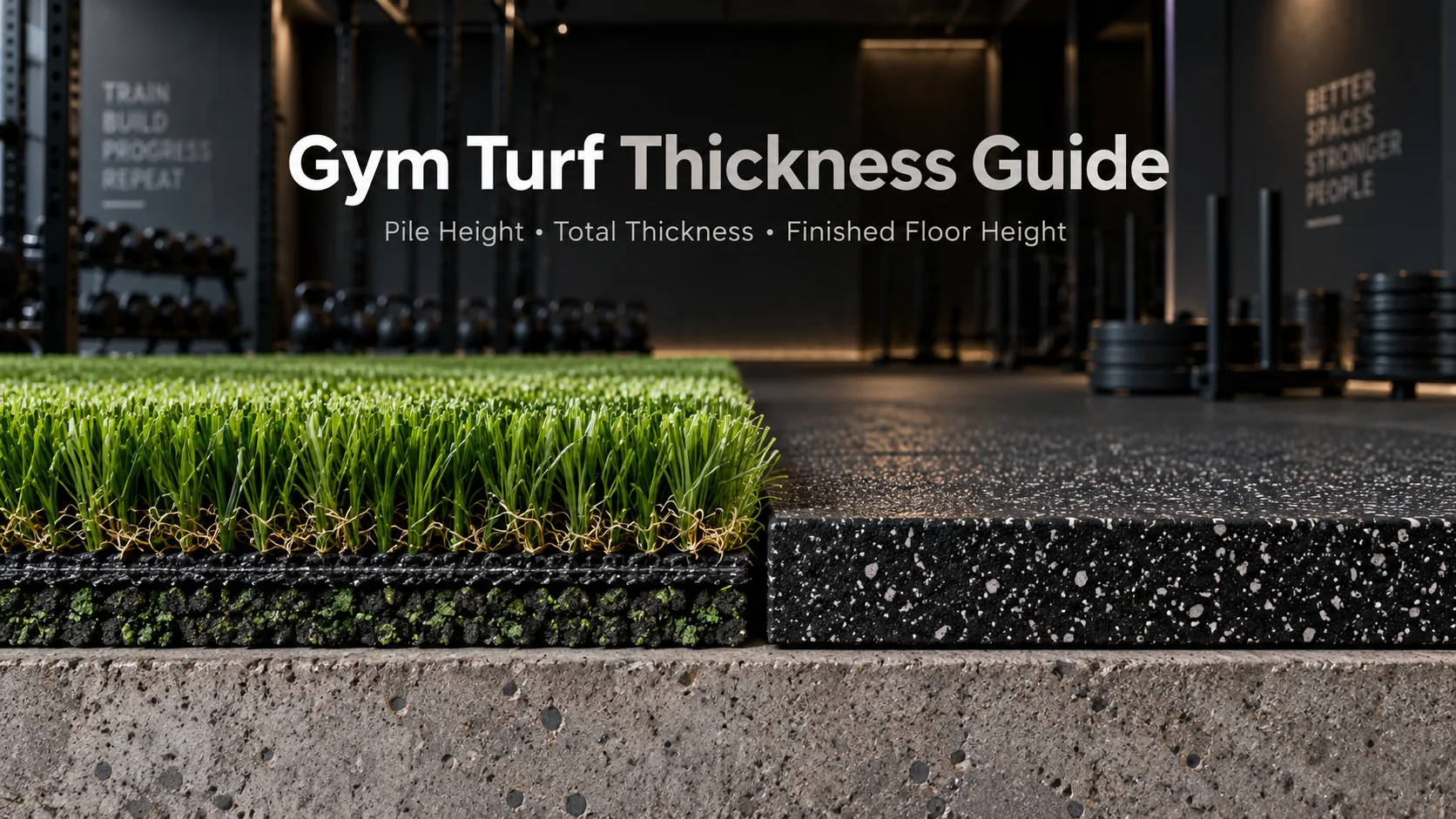
Managing Turf-to-Floor Height Transitions
Gym owners must also manage the height transition between the turf and surrounding flooring, such as:
- Interlocking rubber gym mats
- Olympic weightlifting platforms
- Adjacent sports flooring
If the finished height differential is too large, it creates an unsafe lip. GraceGrass emphasizes measuring existing floor thickness prior to installation, using appropriate turf pile height or underlayment to achieve a flush transition.
Recommended Pre-Installation Calculation:
Existing Floor Thickness + Turf Thickness + Underlayment Thickness = Final Installation Height
Gym Turf Series for Different Training Needs
| Specification / Series | GYMX Series | GYM Series | ECO Series |
|---|---|---|---|
| Yarn Structure | 100% PE narrow-blade KDK curled yarn | 100% PE wide-blade KDK curled yarn | PE straight yarn + PP curled yarn blend |
| Stitch Density | 63,000–84,000 stitches/m² | 31,500 stitches/m² | 24,000–40,000 stitches/m² |
| Available Backing Options | 5–10 mm PU Foam / 3 mm TPE anti-slip backing | 5–10 mm PU Foam / 3 mm TPE | Standard backing only |
Field Performance Comparison
Legacy Solution (Standard Landscape / ECO Turf + Simple Tape):
Under high-frequency sled use, the track develops fiber shedding and bald spots within 1–3 months. The turf easily shifts and curls at the edges, yielding an overall service life of just 3–6 months. Maintenance teams spend extensive labor cleaning loose fibers, while raised edges present constant tripping risks for members.
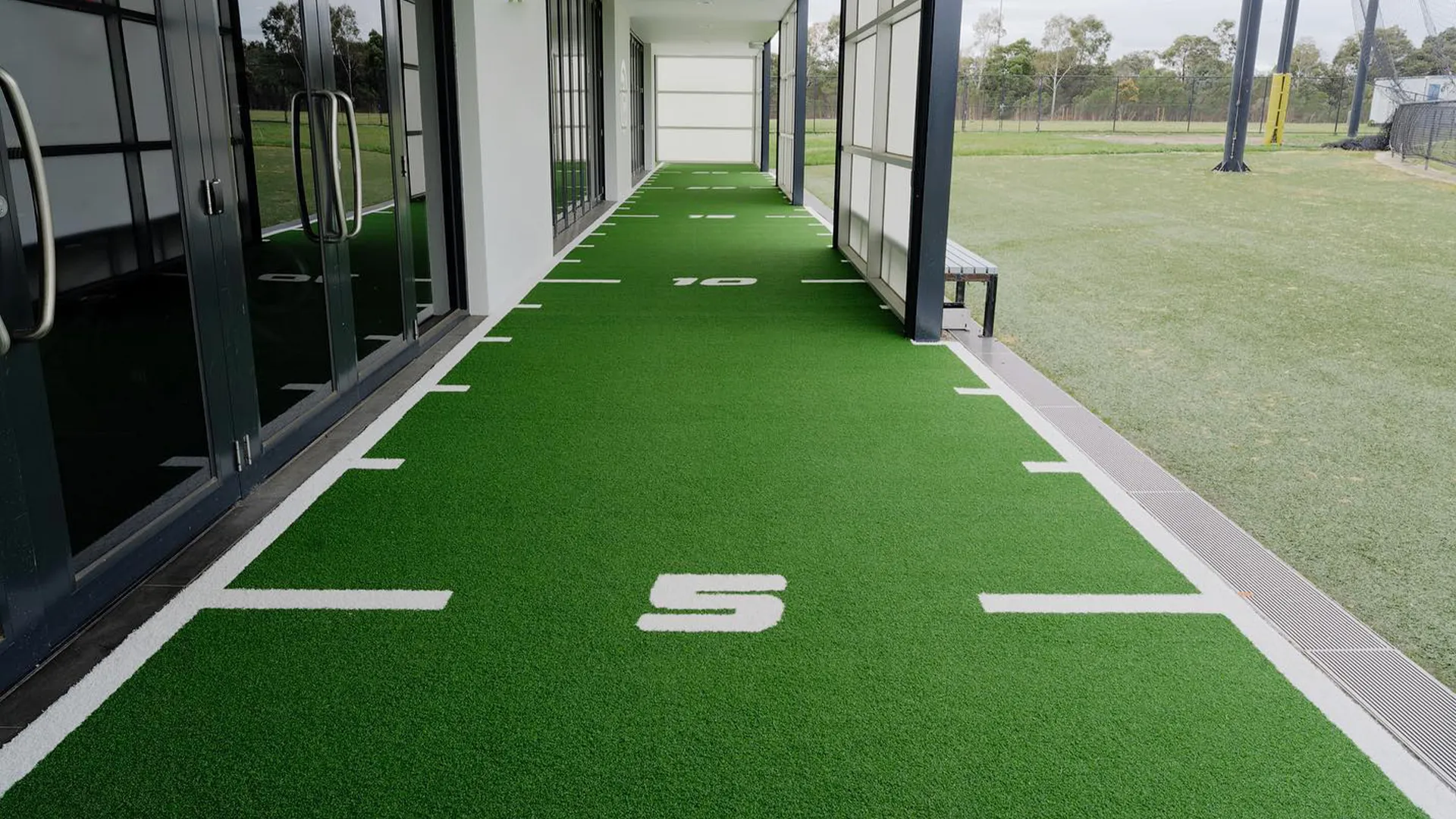
Upgraded Solution (GYMX / GYM Professional Turf + Matched Installation):
Under the same high-intensity sled conditions, the upgraded system shows significantly less fiber wear and fewer bald spots, while turf movement, buckling, and seam separation are also reduced. Fiber shedding and janitorial maintenance are reduced, tripping risks are minimized, and long-term costs from frequent turf replacement can be reduced.
Conclusion
Sled training imposes extreme mechanical demands on gym flooring. When a sled track suffers rapid wear, turf migration, or seam separation, simply replacing the turf roll will not resolve the root cause.
Facility managers should evaluate the complete system:
Training Load → Turf Architecture → Fiber Retention → Backing → Subfloor → Anchoring Method → Seam Quality → Routine Maintenance
For high-frequency sled training, CrossFit, HYROX, and commercial functional areas, the goal is not simply finding the thickest or cheapest turf, but selecting an engineered, complete flooring system matched to your actual training conditions.