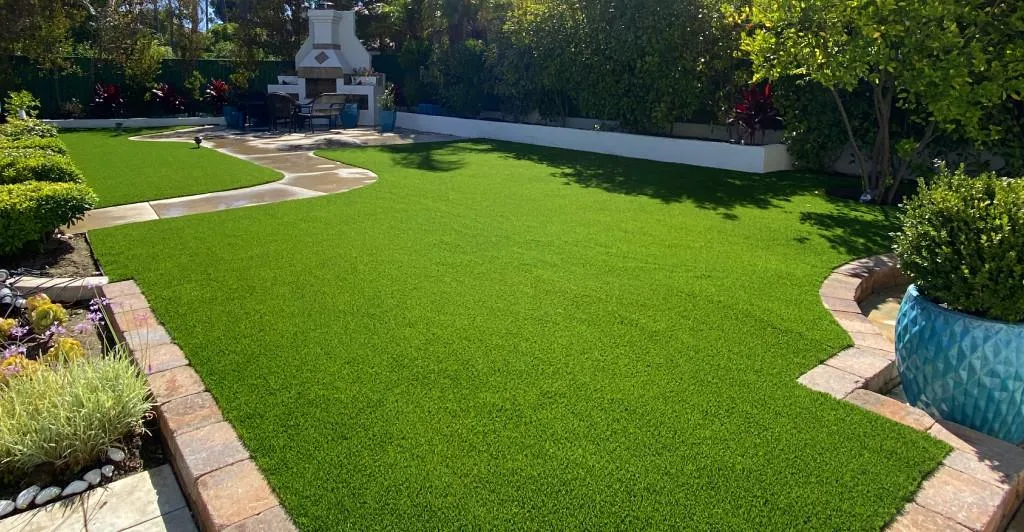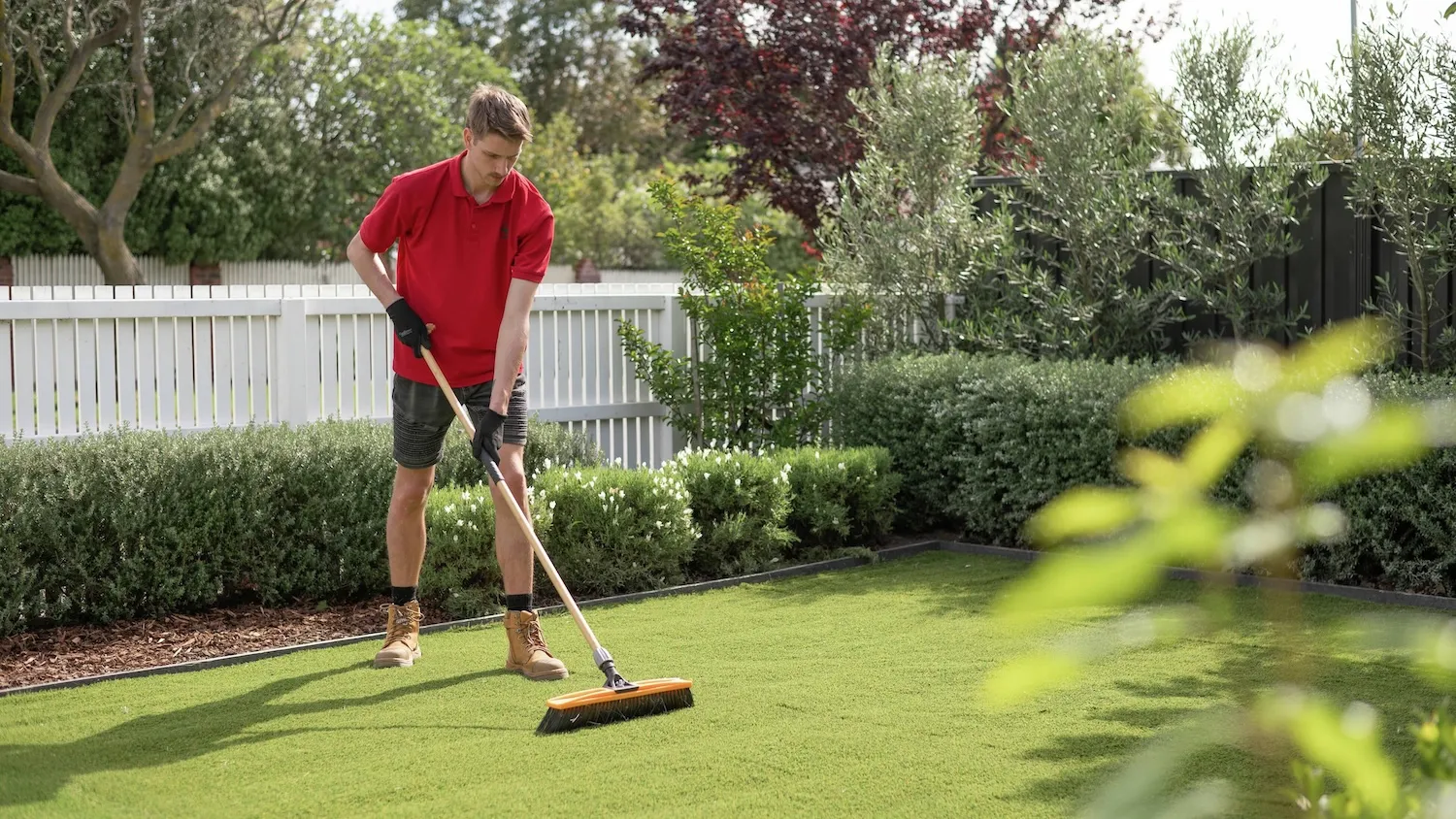
Artificial turf is designed to reduce lawn maintenance, but problems such as flattened fibers, pet odors, poor drainage, and weed growth can still appear without proper care.
For official post-installation care requirements, follow our artificial grass maintenance instructions.
How Proper Maintenance Prevents Artificial Turf Problems
Consistent artificial turf care delivers more than a good-looking lawn:
- Prevents Compaction: Regular brushing prevents the fibers from lying flat, maintaining a natural, upright cushion.
- Extends Lifespan: Minimizes fiber wear in localized high-traffic zones, preventing premature patch replacements.
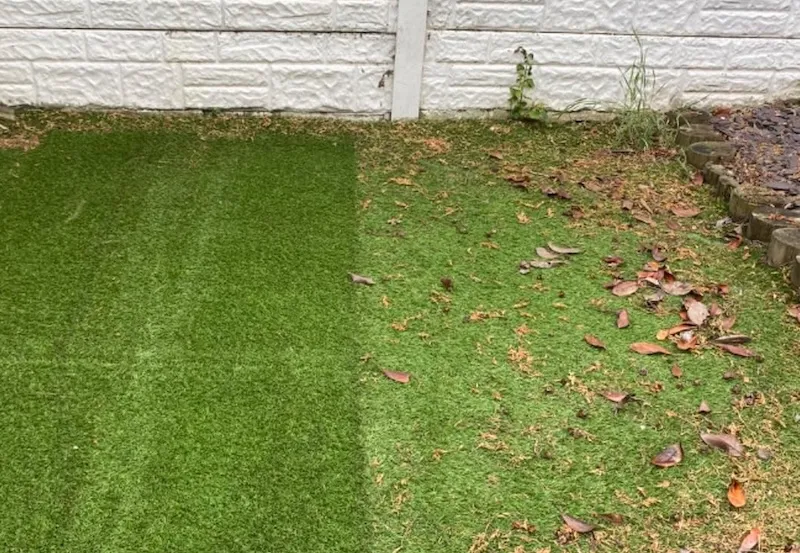
- Maintains Hygiene & Drainage: Swiftly removing organic debris stops mold spores from taking root and keeps the sub-base draining freely.
Common Artificial Turf Problems and How to Fix Them
Even well-installed artificial turf may experience issues if maintenance is neglected. Understanding common problems helps homeowners and facility managers solve them quickly.
| Problem | Possible Cause | Solution |
|---|---|---|
| Flattened grass fibers | Heavy foot traffic or furniture pressure | Brush against the pile direction. |
| Artificial turf smells bad | Pet waste buildup or trapped moisture | Rinse and use enzyme cleaner. |
| Poor drainage | Blocked holes or compacted infill | Remove debris and inspect drainage. |
| Weeds growing through turf | Organic material accumulation or installation issues | Remove weeds and improve prevention. |
| Turf looks uneven | Infill displacement or heavy traffic | Redistribute infill and groom surface. |
| Loose seams | Installation damage or movement | Repair as soon as possible. |
| Faded appearance | Chemical damage or excessive contamination | Avoid harsh cleaners and clean properly. |
Artificial Turf Care Schedule for Different Applications
A simple daily and weekly routine is the foundation of how to maintain artificial turf.
| Maintenance Task | Residential Lawn | Pet Turf | Sports Turf |
|---|---|---|---|
| Brush fibers | Every 1–2 weeks | 2–3 times per week | Weekly or after heavy use |
| Remove debris | Weekly | Several times per week | Daily if needed |
| Rinse surface | Monthly | Weekly | Based on usage |
| Deep cleaning | 2–4 times per year | Monthly | Professional schedule |
| Check drainage | Seasonally | Monthly | Regular inspection |
| Check infill level | Yearly | Several times per year | Regularly |
Pro Tip: A consistent maintenance schedule is much easier and cheaper than repairing turf that has been neglected for a long time.
Professional Tools and Techniques for Artificial Turf Care
The right tools keep your lawn fresh with minimal effort. Using the correct gear prevents accidental mechanical and chemical damage during cleaning.
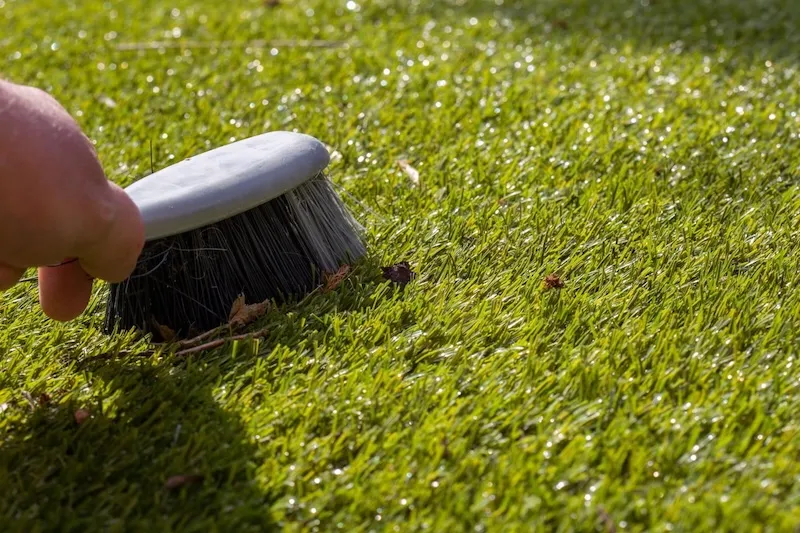
1. How to Brush Artificial Turf Without Damaging Fibers
Many customers believe brushing is purely cosmetic. However, based on real project experience, incorrect brushing methods can damage turf fibers and reduce long-term performance.
Metal brushes or extremely hard plastic brushes can create excessive friction and damage grass fibers, especially after repeated use. Once fibers lose their recovery ability, they may become uneven, permanently flattened, or affect the overall appearance of the turf.
Match Brush to Your Turf Fiber Type
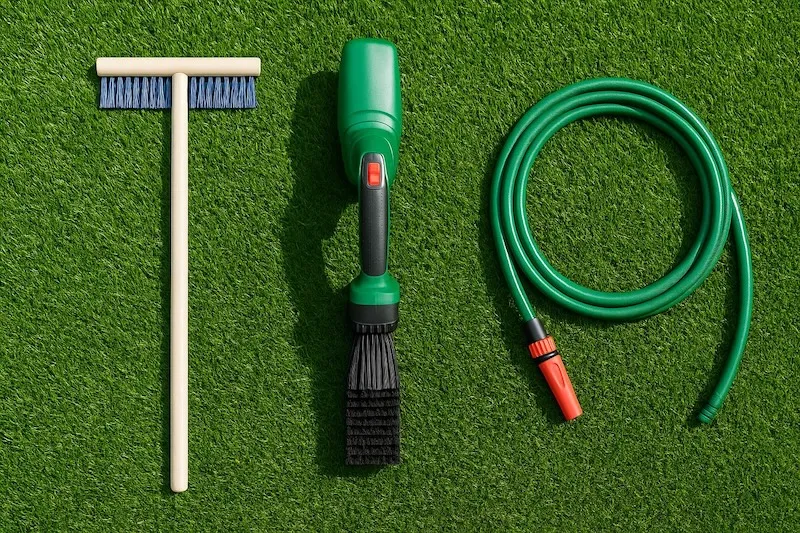
For both landscape and sports turf, always use professional plastic or nylon brushes specifically designed for synthetic grass maintenance to protect the structural integrity of the yarn.
- For Softer, Low-Dtex Fibers: A Strip Brush (Linear Brush) is the ideal choice. It provides gentle, uniform maintenance without putting excessive localized pressure on flexible, pliable grass blades.
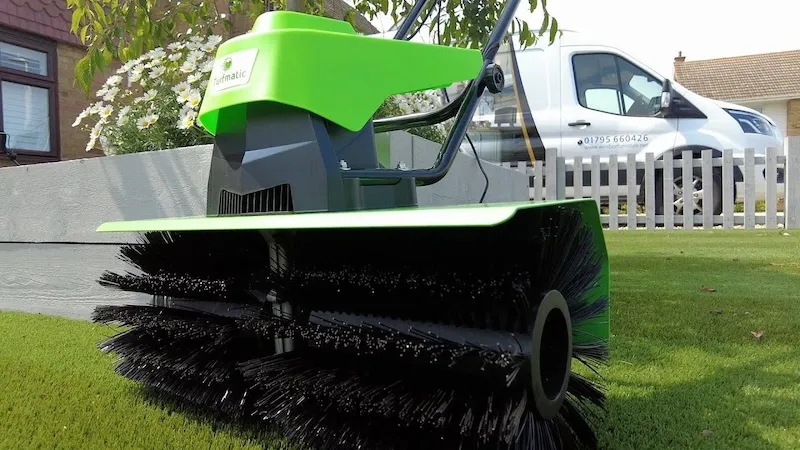
- For Stronger, Rigid, or Sports Fibers: A Roller Brush (Rotary Groomer) provides superior mechanical lifting performance. For sports surfaces like football pitches, rotary brushing serves a vital dual function: it lifts the heavy blades while perfectly redistributing silica sand and rubber granules to keep the infill depth uniform across the field.
Choose Maintenance Equipment Based on Project Size
- Small Areas (Private Gardens): A compact Synthetic Turf Groomer is usually enough.
- Large Fields (Commercial Fields, Football Pitches, Large Landscape Projects): Professional Synthetic Turf Groomers powered by gasoline or diesel engines are recommended to ensure consistent results.
Pro Field Rule: More force does not equal better results. Excessive manual downward pressure shears the fibers off the backing. Let the velocity and design of the correct bristle do the lifting work, not brute force.
2. How to Remove Leaves and Debris Without Damaging Turf
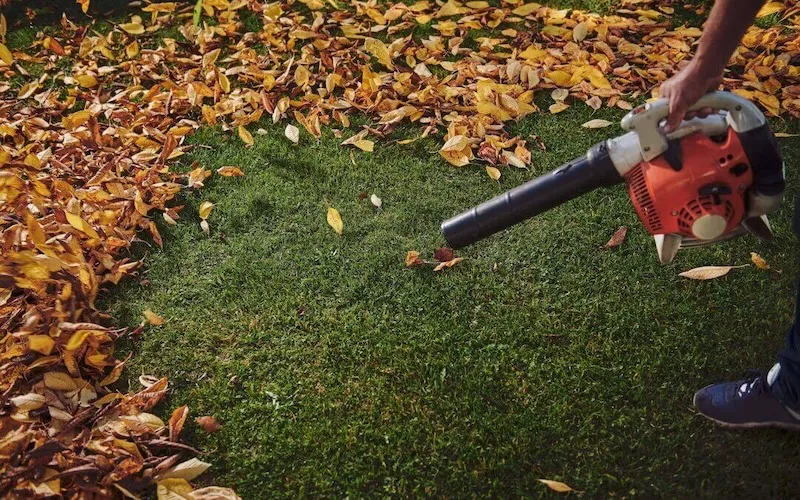
Leaves, twigs, and dust accumulate quickly on synthetic grass. A leaf blower clears loose material without disturbing the surface.
For smaller installations, a stiff-bristled nylon broom is enough to sweep debris toward a collection point. If you have pets or heavy tree coverage, a higher-powered blower cuts manual sweeping time and prevents organic matter from settling into the turf base.
3. Cleaning Products to Avoid on Artificial Turf
While synthetic turf is engineered for extreme outdoor durability, it is not chemically inert. Using aggressive retail chemicals to treat stubborn stains can turn a minor cosmetic issue into irreversible structural failure.
Strong acidic or highly alkaline ingredients, as well as aggressive chemical products, should never be used. These cleaners may affect the color and appearance of the grass fibers, and may also reduce the flexibility and stability of the SBR backing over time.
For daily cleaning, strong chemicals are usually unnecessary. For normal stains, customers can utilize a highly diluted solution of neutral pH, plant-based cleaner or mild dish soap mixed with warm water. This is a safer, cheaper, and highly effective option.
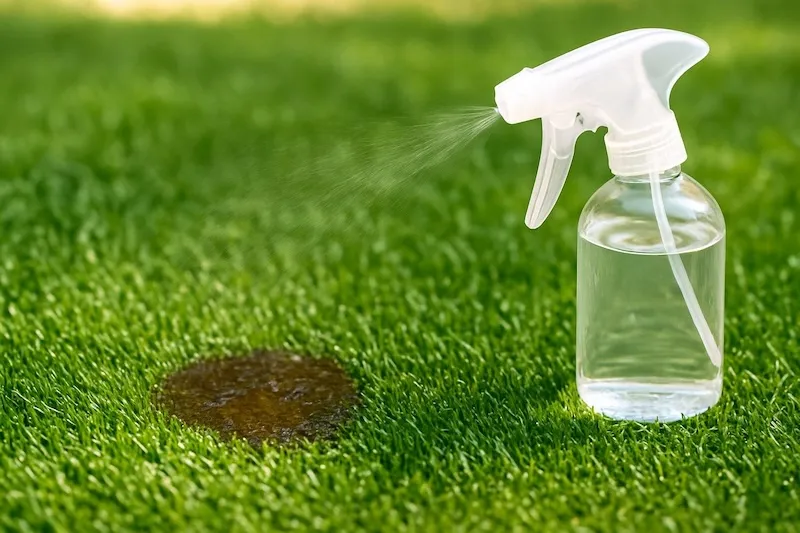
Pro Tip on Mold & Odors: Mold, mildew, and unpleasant odors only thrive when stagnant moisture is trapped underneath decomposing organic matter. Instead of pouring harsh chemicals on your turf, prevent these issues entirely by clearing organic debris weekly to maintain optimal sub-base drainage.
For difficult problems such as heavy oil stains or serious mold, we recommend customers avoid testing unknown chemicals by themselves. Incorrect cleaning methods may turn a small stain into permanent damage. In these situations, it is better to contact a professional artificial turf cleaning team who can use suitable equipment and proper cleaning methods.
How to Remove Common Artificial Turf Stains
| Stain Type | Recommended Solution & Protocol |
|---|---|
| Pet Waste & Urine | Remove solids daily. Thoroughly flush the area with water to dilute urine, then apply a turf-safe enzymatic cleaner to digest proteins and eliminate odors at the molecular level. |
| Mold or Mildew | Treat with a 1:1 solution of white distilled vinegar and water. Scrub gently with a soft-bristled plastic brush, rinse thoroughly, and verify that sub-base drainage is clear. |
| Food, Soda, or Wine | Blot the fresh spill immediately with a clean cloth. Rinse with plain water. For sticky residues, use a mild, diluted plant-based soap and a soft cloth. |
| Oil, Grease & Cooking Fat | Blot excess liquids carefully. Apply a concentrated mixture of grease-cutting dish soap and warm water. Work gently into the fibers, then flush completely with water. |
| Chewing Gum & Tree Sap | Apply ice cubes, dry ice, or an aerosol refrigerant freeze spray directly onto the substance until hardened. Gently shatter and lift the frozen mass. Never scrape with sharp metal knives. |
| Unknown Heavy Stains | Always spot-test a hidden edge first with a mild detergent. If unsuccessful, stop immediately and consult a professional turf specialist before applying any solvent. |
Seasonal Artificial Turf Care Tips for Year-Round Performance
Artificial turf can be used throughout the year, but seasonal changes affect how often maintenance should be performed. Weather conditions, falling leaves, temperature, and moisture levels all influence turf performance.
Spring Maintenance: Post-Winter Restoration
- Debris Clean-Up: Remove decayed leaves and twigs left over from winter. Left untreated, damp organic matter creates a fertile soil layer where weeds can germinate.
- Inspect Drainage: Observe your lawn during heavy spring rains to ensure there is no localized pooling, which indicates a clogged sub-base.
- Restore Pile: Brush matted areas back into an upright position to prepare for high-traffic summer usage.
Summer Maintenance: Odor and Heat Control
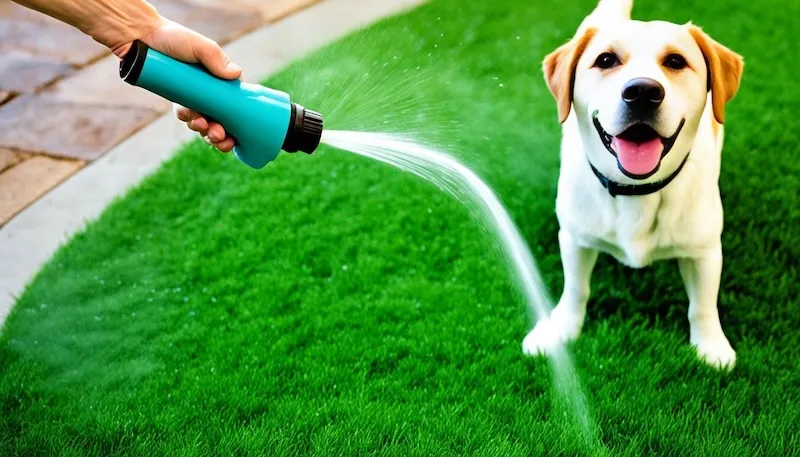
- Frequent Rinsing: Periodically rinse the turf with cool water to wash away accumulated dust, pollen, and static electricity.
- Accelerated Pet Care: Warm temperatures accelerate bacterial activity in pet zones. Increase enzyme treatments to prevent urine salts from crystallizing and off-gassing.
- Check High-Wear Zones: Monitor play areas and pathways near patio furniture, and brush them regularly to prevent heat-induced matting.
Fall Maintenance: Foliage Management
- Active Leaf Removal: Falling leaves are the biggest seasonal challenge. Use a leaf blower or plastic rake weekly to prevent a dense wet layer from suffocating the turf's drainage matrix.
- Gutter & Surrounding Prep: Keep nearby gutters and planters clean so storm runoff doesn't wash dirt and silt onto the turf surface.
Winter Maintenance: Ice & Snow Safeguards
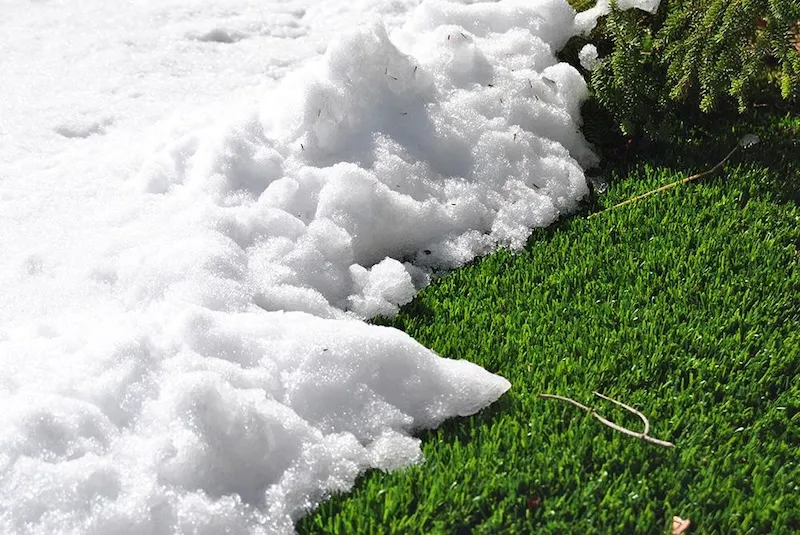
- Avoid Metal Shovels: Sharp metal edges can easily slice turf fibers and tear seams. If snow removal is necessary, only use plastic shovels.
- Allow Natural Melting: For light snow, the safest protocol is to let it melt naturally. The drainage backing is fully capable of handling the meltwater.
- Ban Chemical Melters: Never apply harsh salt-based ice-melting chemicals; they can leave white mineral residues that damage the backing's flexibility over time.
Choosing Durable Turf Makes Maintenance Easier
The ultimate secret to simple maintenance is starting with a turf system engineered specifically for your application's demands. High-traffic commercial properties, public parks, and athletic installations benefit immensely from systems designed to resist fiber matting and maximize hydraulic flow.
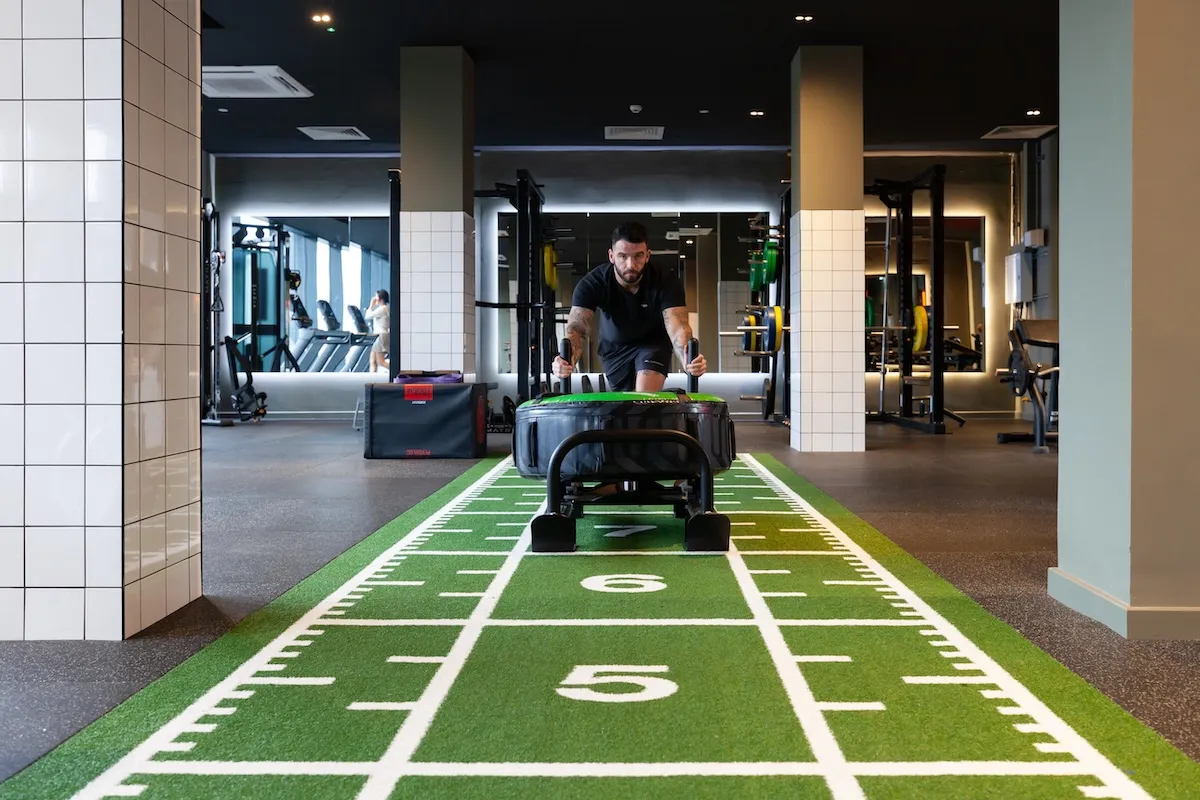
For demanding multi-sport fields, commercial gyms, and pet facilities where heavy use puts a massive premium on durability, traditional infill systems (which require tons of silica sand or crumb rubber) introduce severe long-term maintenance bottlenecks, such as infill migration, hardening, and constant manual leveling.
To bypass these maintenance headaches entirely, many modern sports facilities are upgrading to next-generation non-infill football grass. By eliminating the need for sand and rubber infill, these advanced turf systems offer professional-grade shock absorption and ball roll while cutting your routine grooming time and costs by more than half.
FAQs About Turf Maintenance
1. Can you pressure wash synthetic grass?
Plain water and a gentle garden hose handle 95% of routine cleaning. If you must use a pressure washer for deep cleaning, you must keep the setting below 1,000 PSI and hold the spray nozzle at least 12 inches away from the grass. Excessive pressure can tear fiber tufts right out of the primary backing or completely displace your infill foundation.
2. What is the best way to remove stubborn pet urine smells?
Water alone only dilutes urine; as the water evaporates, it leaves behind concentrated uric acid crystals that trap foul odors. To eradicate the smell permanently, you must apply a bio-enzymatic turf cleaner. The active enzymes physically consume and break down the chemical bonds of the uric acid and proteins, leaving the backing completely sanitized.
3. Is Artificial Turf Cheaper to Maintain Than Natural Grass?
Yes. Compared to a natural lawn—which requires constant mowing, fertilizing, chemical weeding, aeration, and heavy seasonal watering costs—artificial turf reduces annual maintenance labor and expenses by over 70%. A light brushing and occasional rinsing are all it takes to protect your long-term investment.
4. Why does artificial turf become flat?
Artificial turf becomes flat mainly because of heavy foot traffic, furniture pressure, pet activity, or improper maintenance. High-use areas often lose their upright appearance over time.
To restore flattened fibers, brush the turf against the pile direction with a soft synthetic or nylon brush. Regular grooming helps lift the blades and maintain a natural look. Avoid metal brushes or excessive pressure, which may damage the fibers.
5. How often should artificial turf be cleaned?
Cleaning frequency depends on usage and environment. Residential turf usually needs weekly debris removal and monthly rinsing. Pet areas require more frequent cleaning, including regular rinsing and enzyme treatments when odors appear.
Regular cleaning prevents buildup, protects drainage, reduces odors, and helps extend the lifespan of artificial turf.
Conclusion
Proper artificial turf care is not about frequent maintenance, but preventing small issues from becoming expensive repairs. Regular brushing, debris removal, and correct cleaning methods help protect turf appearance, drainage, and long-term performance.