Gym Turf Installation in Your Garage: A Complete DIY Guide
Introduction
This guide explains gym turf installation, gym turf, by connecting the direct answer, supporting context, and the details readers need before moving to related products or next-step resources.
Converting a garage into a functional training space starts with the right flooring. Gym turf delivers a durable, shock-absorbent surface suited to sled pushes, agility drills, plyometrics, and general conditioning—all without leaving your home. This guide walks you through every stage of gym turf installation, from subfloor preparation to long-term maintenance, so you can build a high-performance workout area on a DIY budget.
Preparing Your Garage Floor for Gym Turf Installation
Cleaning and Leveling the Concrete Surface
Before laying turf in your garage, the subfloor needs attention. Sweep and degrease the concrete to remove oil, dust, and old coatings—any contaminant left behind can weaken adhesion later. Inspect the slab for cracks and low spots, then fill them with a self-leveling compound or concrete patch to create a flat, uniform base. Heavy turf rolls can be difficult to maneuver alone, so recruit a helper or use a hand truck to position them without damaging the material or the floor.
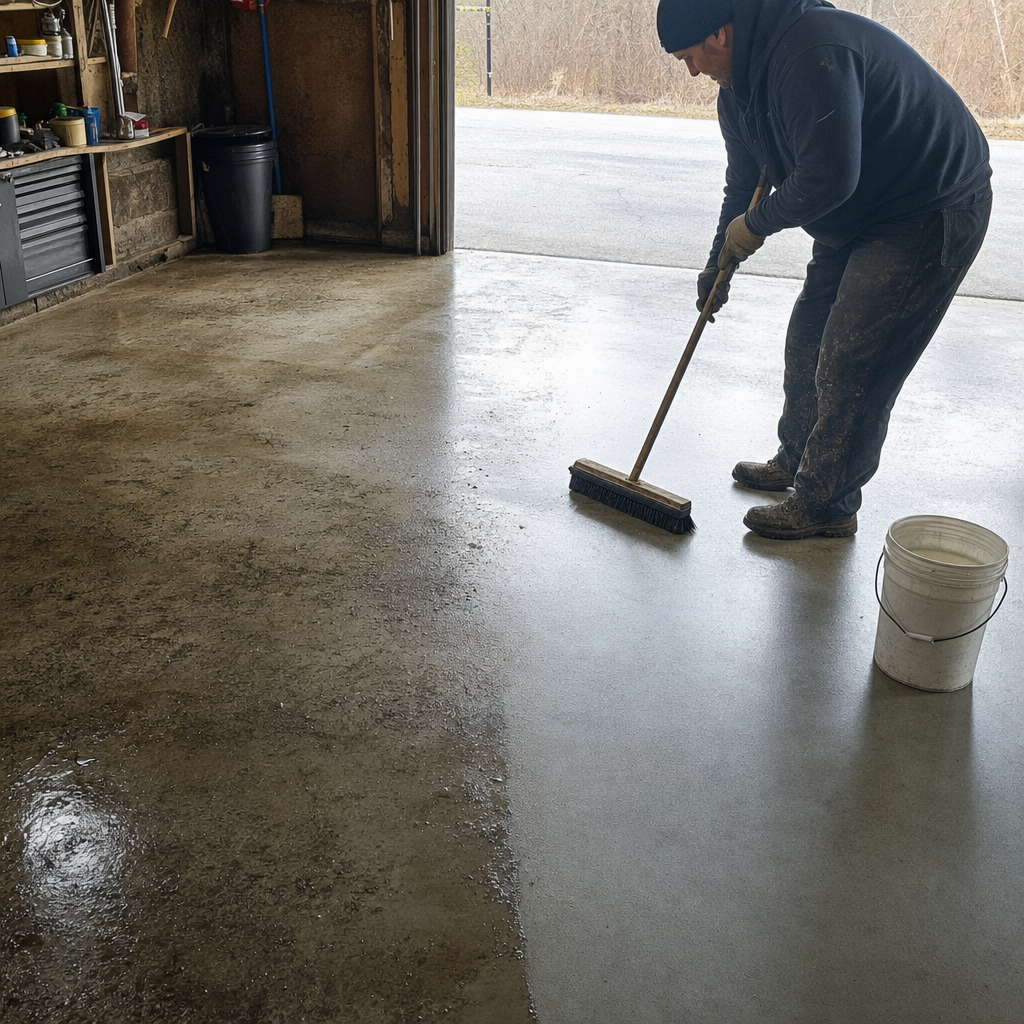 Cleaning and leveling the concrete subfloor is the first step to a successful gym turf installation.
Addressing Moisture and Drainage Concerns
A dry subfloor is non-negotiable for indoor gym turf. Moisture migrating through concrete weakens adhesive bonds and can promote mold beneath the turf backing. If your garage sits below grade or in a humid climate—conditions similar to artificial turf in basement projects—lay a polyethylene vapor barrier over the slab before installation. Allow freshly poured or patched concrete to cure fully, and test for residual moisture with a simple plastic-sheet test (tape a square of plastic to the floor for 24 hours and check for condensation underneath).
Applying a Primer for Better Adhesion
Once the concrete is clean, level, and dry, apply a primer formulated for porous surfaces. A thin, even coat improves the grip between the slab and the turf backing, reducing the chance of lifting or bubbling over time. Follow the manufacturer's cure time before proceeding. This step is especially valuable for permanent gym turf installation where the surface will endure daily training loads.
Choosing the Right Turf for Your Garage Gym
Comparing Turf Materials: Nylon vs. Polyethylene vs. Polypropylene
Three synthetic fibers dominate the indoor turf market, each with trade-offs:
- Polypropylene — The most affordable and highly customizable option, available in many colors and styles. It suits lighter-use areas but wears faster under intense friction.
- Polyethylene — Soft underfoot and resilient, making it popular for functional training zones. A 48 oz polyethylene turf is one of the most widely sold indoor options, offering a balance of comfort and durability across high-traffic areas.
- Nylon — The toughest fiber, built for heavy abrasion from sled work and cleated shoes. A 40 oz nylon turf steps up durability for the most demanding functional zones.
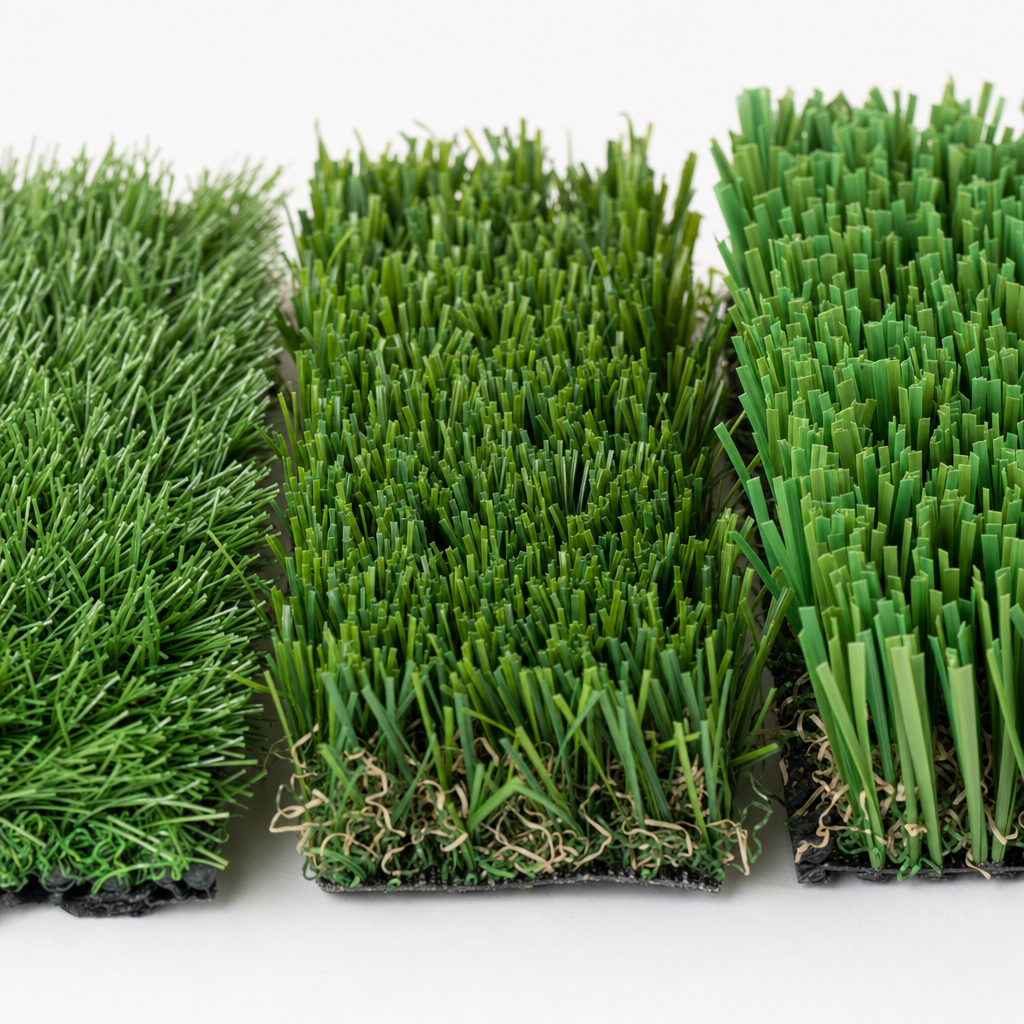 Nylon (left), polyethylene (center), and polypropylene (right) turf fibers show differences in texture and density.
For a garage gym that hosts varied workouts, polyethylene or a nylon-poly blend typically offers the best combination of feel and longevity.
Understanding Turf Thickness and Density for Heavy Use
Face weight—measured in ounces per square yard—directly correlates with durability. As a rule of thumb, the more traffic and the more abrasive the activities (sled drags, turf shoes, drop sets), the higher the face weight you want. Thicker, denser pile absorbs more impact, protecting both joints and the concrete beneath. The same qualities that define the best heavy-use turf for retail center play zones apply here: a dense, well-padded surface resists compaction and fiber breakdown under repeated stress.
Why Drainage Matters for Indoor Turf
Even indoors, sweat, spilled water, and cleaning solutions need somewhere to go. A turf with a permeable backing lets liquids pass through and evaporate rather than pooling on the surface, which prevents odor and bacterial growth. Prioritizing drainage keeps your indoor gym turf hygienic between deep-cleaning sessions and extends the life of the adhesive layer underneath.
Step-by-Step Guide to Installing Gym Turf in Your Garage
Measuring and Cutting the Turf to Fit Your Space
Measure the garage floor in both directions and add 2–3 inches of excess per edge for final trimming. Roll the turf out face-up and let it acclimate to room temperature for several hours—this relaxes the backing and reduces wrinkles. Cut from the back side with a sharp utility knife, using a straightedge to keep lines clean.
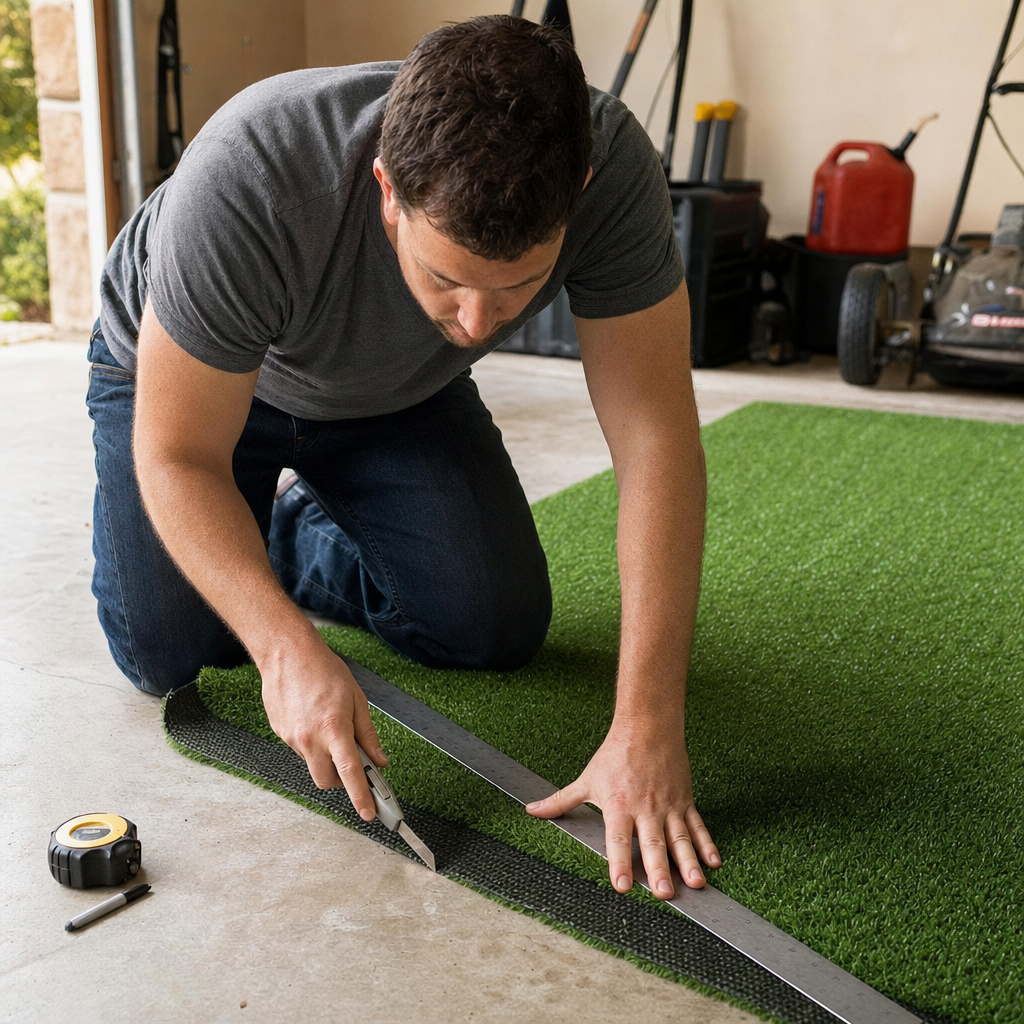 Measure twice, cut once: using a straightedge and sharp utility knife to trim turf to fit your garage.
Laying the Turf and Seaming the Pieces Together
Position the first piece against the longest wall and unroll toward the opposite side. If your layout requires more than one turf strip, butt the edges tightly together. For a stronger join, apply seam tape or adhesive along the junction. Many padded gym turfs are designed to be installed without infill; the foam backing alone provides cushion and a grass-like feel, eliminating rubber pellets or sand.
Securing the Turf to the Floor with Adhesive or Tack Strips
Choose a fastening method based on permanence:
- Temporary — Abut rubber gym flooring or heavy equipment against the turf edges to hold everything in place. Double-sided carpet tape along the perimeter adds grip without committing to glue.
- Permanent — Spread a turf-rated adhesive across the subfloor with a notched trowel, then press the turf into place. Work from the center outward to push air bubbles toward the edges.
- Tack strips — Nail or glue perimeter strips for a secure edge without full-floor adhesive.
Whichever method you select, confirm the turf lies flat and wrinkle-free before the bond sets.
Maintaining Your Garage Gym Turf for Longevity
Routine Cleaning and Brush Maintenance
Daily debris removal prevents fibers from matting and keeps the surface safe. At the end of each session, sweep or vacuum loose dirt, chalk, and dust. Weekly, brush the turf against the grain with a stiff-bristle broom to restore pile height. Periodic disinfecting with a turf-safe cleaner controls bacteria and keeps the surface sanitary.
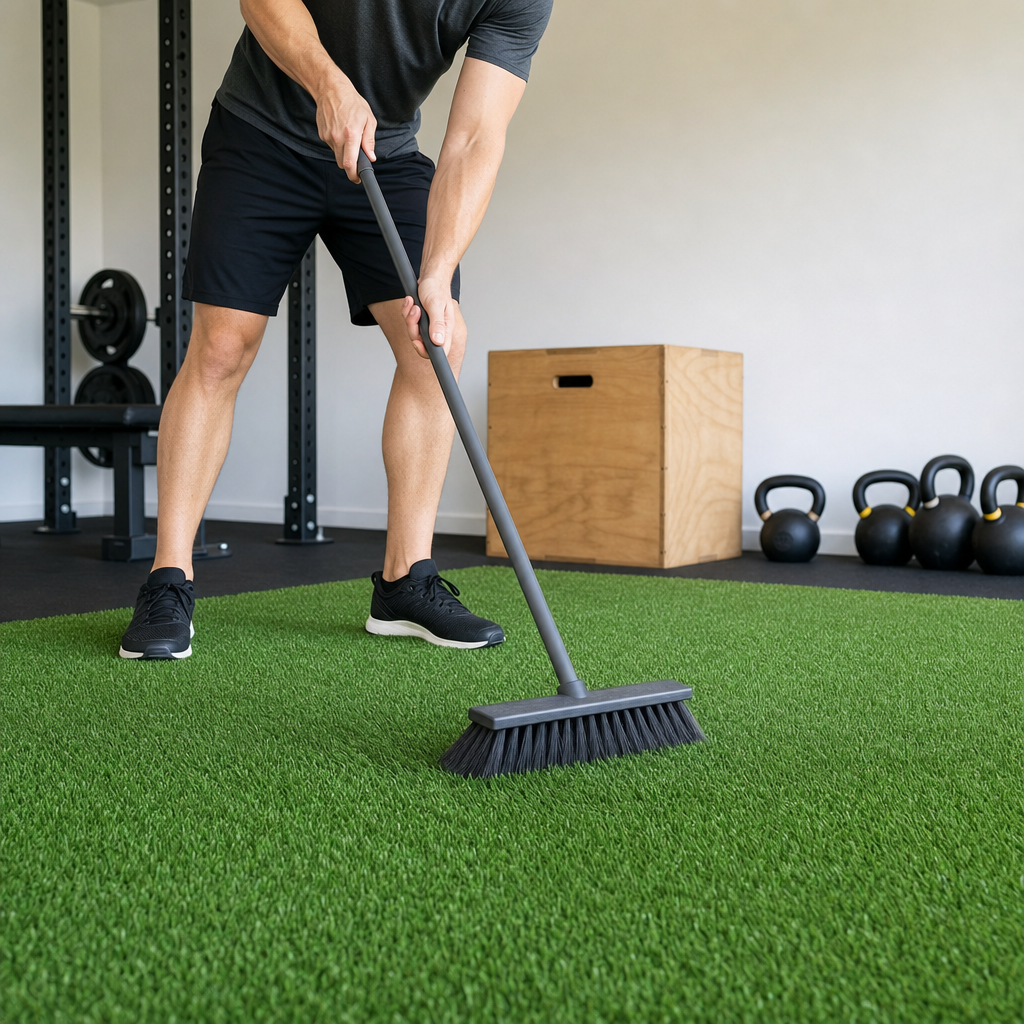 Weekly brushing against the grain keeps turf fibers upright and extends the life of your gym flooring.
Handling Spills, Odors, and High-Traffic Areas
Sweat and spilled liquids break down synthetic fibers if left unattended. Blot spills immediately and apply a mild disinfectant. In high-traffic lanes—sled tracks, sprint paths—brush more frequently to prevent compaction. Scheduling a deeper clean with an enzyme-based deodorizer every few weeks controls odors without damaging the turf.
When to Hire Professional Gym Floor Installers
Routine upkeep is straightforward DIY work, but large-scale installations or repairs benefit from professional expertise. Commercial gym flooring installation demands precise subfloor leveling, tight seam alignment, and correct adhesive selection—mistakes here shorten the floor's lifespan significantly. If your project exceeds a simple single-roll layout, consulting experienced gym floor installers ensures a result that holds up under years of heavy use.
Gym Turf vs. Rubber Flooring: Which Is Better for Your Workout Space?
Comparing Shock Absorption and Joint Protection
Gym turf with foam backing is engineered for dynamic, high-velocity movements—sprints, box jumps, agility cuts—where traction and impact absorption matter most. Rubber flooring excels under barbells and squat racks, dampening vibration and protecting the slab from dropped weights. Many facilities combine both: turf for functional training lanes and rubber tiles beneath lifting platforms.
Ease of Maintenance and Cleanliness
Non-infill turf eliminates loose rubber pellets and simplifies sweeping. Training lines and distance markers woven directly into the fiber remove the need for tape or paint that wears away. Rubber flooring can absorb sweat odors over time and requires periodic deep cleaning to stay fresh. Both surfaces are low-maintenance overall, but turf's non-porous structure and integrated markings give it a slight edge in daily upkeep.
Cost and Installation Differences
Gym turf installation costs vary with face weight, backing type, and optional underlayment. Custom logos, colors, and agility markings can be woven in during manufacturing, reducing long-term layout expenses. Rubber flooring typically ships as interlocking tiles or rolls that are quick to lay but offer fewer customization options. For a garage gym that hosts CrossFit-style training, sled work, and friction drills, turf provides a multi-purpose surface that adapts to a wider range of activities than rubber alone.
Frequently Asked Questions
How much does it cost to install gym turf in a garage?
Costs depend on square footage, turf quality, and subfloor condition. A DIY gym turf installation limits expenses to materials—turf, adhesive, and any underlayment—while professional labor adds a separate fee. Request quotes from local suppliers, specify your intended use, and factor in primer and seam tape for an accurate budget.
Can I install gym turf myself or should I hire a professional?
Most homeowners can handle a single-roll garage installation with basic tools and careful subfloor prep. Hiring a professional makes sense for multi-piece layouts, complex seaming, or spaces that require significant leveling. Professional indoor turf installation reduces the risk of adhesive failure and uneven seams that shorten floor life.
What is the best turf for a home garage gym?
Look for a polyethylene or nylon-blend turf with a face weight of at least 40 oz and a foam or rubber backing for shock absorption. Verify that the product is rated for indoor use and heavy foot traffic. Higher-density options resist compaction from sled pushes and equipment drops better than lightweight alternatives.
How do you clean and maintain artificial turf in a gym?
Sweep or vacuum after every session to remove surface debris. Brush against the grain weekly to keep fibers upright. Disinfect with a turf-safe cleaner on a regular schedule, and treat spills immediately to prevent odor buildup. Consistent care preserves both the appearance and performance of your gym turf for years.
Conclusion
The key to understanding gym turf installation, gym turf, is separating the main answer from supporting context, then using the evidence above to choose the most relevant next step.